Maui's $14M Wastewater Facility Upgrade Enhances Water Resilience and Sustainability
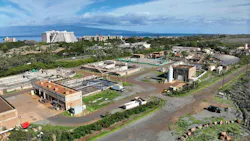
A $14 million upgrade to the Lahaina Wastewater Reclamation Facility in Maui will strengthen the region's long-term water resilience by expanding production of recycled water while also improving treatment reliability and reducing environmental impacts. The project was recently recognized as the Hawaii Society of Professional Engineers' 2026 Project of the Year.
According to Jacobs, which led the project, the improvements transformed aging infrastructure originally constructed in the 1970s into a more reliable recycled water system capable of supporting irrigation demands across West Maui. The upgraded facility will provide a consistent supply of high-quality recycled water for golf courses, resorts, public parks and future agricultural applications, helping reduce reliance on potable water supplies.
“This project is a meaningful step forward. By improving the reliability of our recycled water system, we’re better equipped to serve our community, protect our natural resources and plan for the future,” said county of Maui Wastewater Capital Improvement Program Manager Juan Rivera.
The county of Maui is not alone in pressing forward on water reuse as a way to shore up resilient water resources, particularly as a way to offset the use of potable water in applications where non-potable water will do. Communities across the U.S. are facing increased pressure from droughts, population booms and growth in the private sector, which includes manufacturing facilities, data centers and other tech sector build outs. For Maui, the pressures were related to drought and wildfire recovery efforts, but the overall principles behind water reuse remain, regardless of the pressure felt by the utility.
Jacobs reported that advanced process modeling and integrated control systems were deployed to help coordinate pumps, valves and monitoring equipment, reducing operational disruptions that had previously affected treatment performance. Leveraging advanced tools like this also aided the facility in managing variable flows. Additionally, the upgrades utilized existing infrastruture rather than constucting new tanks, basins or facilities, an aspect that made Jacbos project leadership most proud.
“We did more than upgrade a facility — we unlocked the value of infrastructure that was already there, making it more efficient, sustainable and resilient,” emphasizes Jacobs Vice President, Derek Ono.
The final project reduced dependence on injection wells while protecting groundwater and coastal resources, offering a sustainable future for the system and the community it serves.
About the Author
 Bob Crossen
Bob Crossen
Bob Crossen is the vice president of content strategy for the Water and Energy Groups of Endeavor Business Media, a division of EndeavorB2B. EB2B publishes WaterWorld, Wastewater Digest and Stormwater Solutions in its water portfolio and publishes Oil & Gas Journal, Offshore Magazine, T&D World, EnergyTech and Microgrid Knowledge in its energy portfolio. Crossen graduated from Illinois State University in Dec. 2011 with a Bachelor of Arts in German and a Bachelor of Arts in Journalism. He worked for Campbell Publications, a weekly newspaper company in rural Illinois outside St. Louis for four years as a reporter and regional editor. Crossen can be reached at [email protected].