Don't wait for the next hurricane: Where wastewater utilities should be investing now
Key Highlights
- Evaluate whether existing infrastructure can handle current wet-weather flows, including treatment capacity, storage and electrical systems.
- Incorporate resilience considerations early in project planning through collaborative approaches like CMAR to ensure operational continuity during construction.
- Develop and maintain partnerships with contractors, engineers and local agencies to enable rapid response and recovery when storms hit.
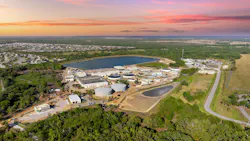
Across the country, many wastewater treatment facilities are being asked to manage larger storm events, higher wet-weather flows and growing populations than they were originally designed to handle. Emergency response plans remain essential, but the utilities that weather storms most successfully are often the ones that invested in resilience years before a hurricane ever appeared in the forecast.
For utilities planning capital improvements, resilience should not be treated as a standalone initiative or something to revisit each spring. It should be embedded into how facilities are evaluated, designed and operated year-round.
Here are four areas utilities should prioritize now to strengthen resilience before the next hurricane arrives.
Evaluate whether your system is built for today's wet-weather flows
Many wastewater facilities were designed decades ago using rainfall patterns and hydraulic assumptions that no longer reflect today's conditions. More intense storms, aging infrastructure and continued community growth are placing additional strain on systems that were never intended to handle these demands.
One of the most important questions utilities can ask is whether their existing infrastructure can reliably perform during peak wet-weather events, not just under normal operating conditions.
That assessment should include treatment capacity, pumping redundancy, storage, electrical systems and potential hydraulic bottlenecks. Identifying those vulnerabilities early allows utilities to prioritize capital investments before emergency conditions expose them.
As an example of what this looks like in practice, at the City of St. Petersburg's Northwest Water Reclamation Facility, originally constructed in 1957, assessments revealed that projected wet-weather flows had outgrown the plant's original design capacity. The recently completed modernization project expanded treatment capacity from 20 to 30 million gallons per day, added two 7.5-million-gallon storage tanks and constructed a new influent pump station to improve the facility's ability to manage high-flow events while supporting long-term system reliability.
Build resilience into project planning
Resilience is determined as much by how projects are planned and delivered as by the infrastructure that's ultimately built.
Considering operational continuity, feasibility and emergency response early in project development helps utilities identify potential risks before construction begins. Collaborative delivery approaches can also improve decision-making by bringing owners, engineers and contractors together early to evaluate design options, sequencing and long-term operational impacts.
For example, for the St. Petersburg project, the City adopted a Construction Manager at Risk (CMAR) delivery approach, allowing the project team to work collaboratively from the earliest stages of design. That planning proved valuable as construction progressed within an active treatment facility that had to remain online while crews navigated a constrained site, high groundwater conditions and severe weather throughout the project.
Maintaining uninterrupted operations during major capital improvements requires careful sequencing, continuous communication and a shared understanding of how construction activities affect day-to-day plant operations.
Strengthen partnerships before they're needed
When hurricanes strike, wastewater operators and utilities don't have time to establish new working relationships. Recovery depends on partners who already understand the facility, the response plan and one another's roles.
Developing project-specific hurricane preparedness plans, defining responsibilities before storm season and coordinating regularly with contractors, engineers and local agencies can significantly improve response efforts when severe weather occurs.
The aftermath of Hurricane Ian in 2022 is proof. Crews working on a project in Naples transitioned from active construction to site stabilization using a hurricane preparedness plan that had been developed before landfall. After the storm, teams returned to assess damage, stabilize conditions and coordinate with local officials before safely resuming work.
Those experiences helped inform later work in St. Petersburg, where established relationships enabled project teams to mobilize quickly following Hurricane Milton to support repairs to critical seawall infrastructure and coordinate recovery activities alongside the City.
While every storm presents different challenges, utilities that establish trusted partnerships before emergencies occur are often better positioned to restore operations safely and efficiently.
Make resilience part of every capital investment
Building resilience doesn't always require a complete plant expansion. Many utilities can make meaningful progress by incorporating smaller improvements into projects that are already planned.
Upgrading pump stations, increasing storage capacity, modernizing electrical systems, adding operational redundancy and replacing aging infrastructure all contribute to a system that is better prepared for future storms.
Investments that improve reliability help protect public health, reduce environmental impacts and support faster community recovery when severe weather disrupts normal operations.
Hurricanes will continue to test wastewater infrastructure across coastal communities. The planning, partnerships and infrastructure decisions made today will help determine how reliably those systems perform when the next major storm arrives.
About the Author
Ray Torrejon
Ray Torrejon is district manager, U.S. Civil East, with PCL Construction.