Big Creek WRF expansion sets a landmark standard for sustainable treatment in Georgia
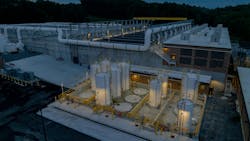
Key project details
- Project Location: Fulton County, Georgia
- Project Size: 8 MGD
- FacilitySize: 32 MGD, with future capacity of 38 MGD
- Project Cost: $35 million
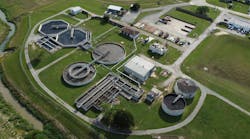
The Big Creek Water Reclamation Facility (WRF) Expansion in Fulton County, Georgia, stands as the largest capital project in the county’s history and one of the most ambitious progressive design-build efforts ever undertaken in the state. Designed to expand treatment capacity from 24 to 32 million gallons per day (MGD) – with provisions for 38 MGD – the project replaces aging infrastructure with state-of-the-art membrane bioreactor (MBR) technology that improves effluent quality and reduces nutrient discharge to the Chattahoochee River by more than 250,000 pounds per year.
David Clark, director of Fulton Count Dpartment of Public Works in Georgia said this facility serves the largest portion of North Fulton county, which required close coordination with all the cities and their development plans to ensure proper sizing with a path for increased capacity as needed.
"We also knew that we wanted to be sure to have the plant meet both current and anticipated permit requirements for discharge into the Chattahoochee River," Clark said. "Therefore, membrane technology was the only advanced treatment process that we considered for the plant."
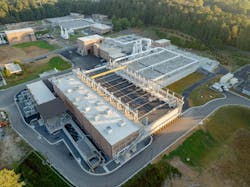
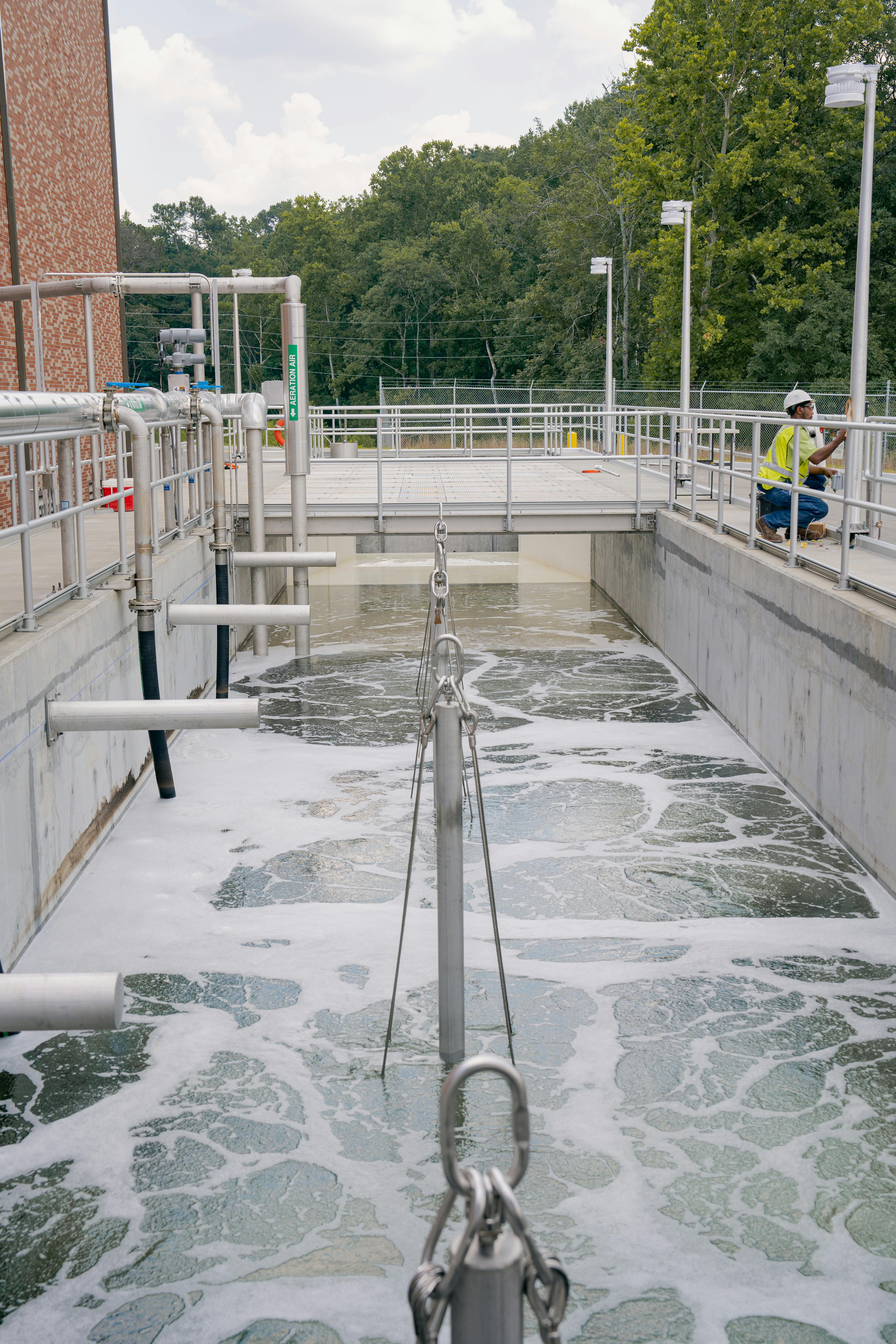
The county's history of success with membranes at its other North Fulton facilities only enhanced it's interest in pursuing the same equipment for the Big Creek WRF.
Beyond performance upgrades, the expansion prioritized sustainability and long-term resilience. The gravity-based hydraulic design eliminates most pumping needs, saving an estimated 40 million kWh over 20 years. Advanced systems, including S2EBPR technology, cut chemical use while enhancing phosphorus removal. A comprehensive odor control network – among the largest in Georgia – transformed the plant into a better neighbor for surrounding communities.
"Fulton County watned to be good neighbors and to address a long standing odor issue," Clark said. "The new odor-control system includes the covering of all treatment basins and maintaining them under negative pressure, vacuum conditions so that any odorous air is captured and routed to treatment."
The more than 270,000 scfm of air flow system uses a two stage process in the highest odor zones, headworks and primary clarification. The first stage are chemical scrubbers and the second is granular activated carbon contactors. The rest of the facility, Clark said, uses the GAC treatment for odor. This allowed the facility to meet higher odor standards and achieve no detectible odors at the site boundary.
"Community perception has shifted accordingly: what was once viewed as a nuisance — with neighbors famously dubbing the nearby grocery store 'Stinky Kroger' — is now seen as a modern infrastructure asset that respects its surroundings and significantly reduces off-site impacts," Clark said.
The team behind the project, led by Fulton County in partnership with Archer Western and Brown and Caldwell, delivered the project using a progressive design-build model that enabled early collaboration, cost transparency, and creative problem-solving. That collaboration proved critical as the project faced historic challenges – from COVID-19 disruptions and supply chain chaos to the complex geology of granite bedrock near the river. Despite those hurdles, the project remained on time and within budget.
"This collaborative working relationship established a strong foundation that proved to be invaluable during the COVID years," Clark said. "Without such a strong and trusting relationship that started early, navigating the challenges that COVID brought, including supply chain and hyperinflation, would have been much more difficult."
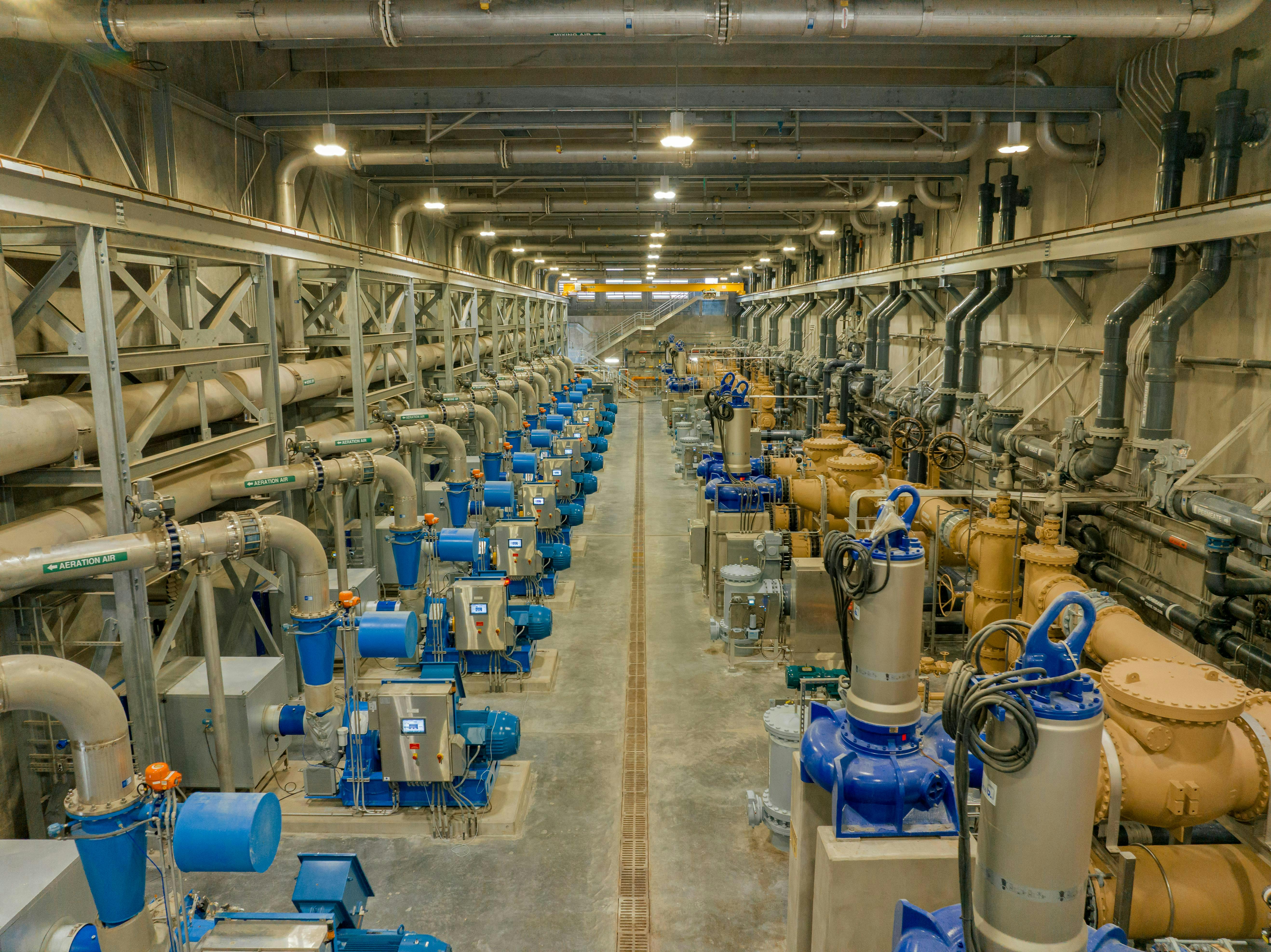
Innovations like deep structural slabs to route piping, reuse of more than 200,000 cubic yards of excavated rock onsite, and the strategic use of tower cranes all helped streamline construction while improving safety. Additionally, the forward flow of the plant is gravity-driven, including through the membranes, which has lowered operational costs. Energy and chemical savings were reduced through the use of ammonia based aeration control (ABAC) and the side-stream enhanced biological phosphorus removal (S2EBPR) system, respectively. Clark said that's not all that was considered, either.
"Currently, Fulton County is exploring the possible use of solar panels to further offset the electricity demand for the administration offices and laboratory," Clark added.
The project was completed in 2025, and the expanded Big Creek WRF set a new benchmark for sustainable, resilient, and community-focused wastewater treatment. Perhaps most important is the original goal; nutrient reduction to the Chattahoochee River, which improves the downstream health of the waterway for other communities.
"Our downstream neighboring utilities withdraw drinking water from the Chattahoochee River and provided potable water to over 2 million people," Clark said. "By reducing nutrient discharge, Big Creek helps maintain a cleaner, more stable source of water for these communities and utilities downstream, and enhances the ecological balance of the river."
In this way, Clark said Big Creek WRF is a demonstration that modern wastewater infrastructure can have its cake and eat it too by meeting growth needs and protecting the environment for the public.
Read about the other 2025 Top Projects
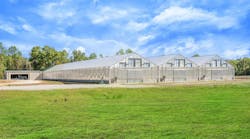 Summerville WWTP biosolids solar dryers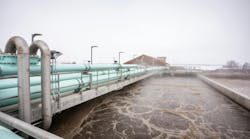
About the Author
 Alex Cossin
Alex Cossin
Associate Editor
Alex Cossin is lead reporter, staff writer and content strategist for Waterworld Magazine, Wastewater Digest, Stormwater Solutions and Water Technology. Cossin graduated from Kent State University in 2018 with a Bachelor of Science in Journalism. Cossin can be reached at [email protected].
 Bob Crossen
Bob Crossen
Bob Crossen is the vice president of content strategy for the Water and Energy Groups of Endeavor Business Media, a division of EndeavorB2B. EB2B publishes WaterWorld, Wastewater Digest and Stormwater Solutions in its water portfolio and publishes Oil & Gas Journal, Offshore Magazine, T&D World, EnergyTech and Microgrid Knowledge in its energy portfolio. Crossen graduated from Illinois State University in Dec. 2011 with a Bachelor of Arts in German and a Bachelor of Arts in Journalism. He worked for Campbell Publications, a weekly newspaper company in rural Illinois outside St. Louis for four years as a reporter and regional editor. Crossen can be reached at [email protected].