Innovation helps Fremont WWTP secure industrial & economic growth
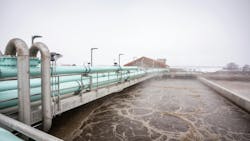
Key project details
- Project Location: Fremont, Nebraska
- Project Size: 16,700 GPM
- Facility Size: 16,700 GPM
- Project Cost: $60 million
Facing rapid industrial growth and aging infrastructure, the City of Fremont, Nebraska, launched a multi-phase expansion of its Wastewater Treatment Plant (WWTP) to meet increasing demand and prepare for future development.
Scott Seelhoff, wastewater superintendent for the City of Fremont, Nebraska, said the city has strong relationships with its industrial dischargers. To enhance those relationships and build new ones, he said this project became vital to the city.
"This project was essential in allowing new industrial facilities to be constructed and existing facilities to be expanded, sparking new and enhancing long term relationships with the industrial partners," he said. "In addition the new treatment facilities, specifically the anaerobic lagoons, provided industrial flow and loading equalization. This equalization allowed the processing facilities to be flexible in their operations on a 5-day workweek, minimizing affects on the treatment process."
Originally built in 1964, the facility underwent four major improvement packages in less than a decade to handle surging flows and loads driven by regional food processing investments. HDR led the design and engineering for each phase, beginning with upgrades to secondary treatment systems to address ammonia, suspended solids and biochemical oxygen demand (BOD). Subsequent projects added three covered anaerobic lagoons for industrial pretreatment, a second egg-shaped anaerobic digester (ESAD) and a state-of-the-art biogas conditioning system that refines methane to pipeline-quality renewable natural gas.
"Working with new technology was one of the biggest engineering hurdles related to specifying and designing a system that can clean biogas to natural gas quality," said Eric Berggren, Senior Vice President, HDR, Omaha, Nebraska. "Integrating this technology into an existing wastewater treatment facility was challenging and required input from the systems providers and the City of Fremont."
The City now receives revenue for both the gas and renewable energy credits, turning waste into a financial and environmental asset.
"Throughout the four distinct phases, the City of Fremont wastewater operations and maintenance staff needed to maintain continuous operation of the facilities which required careful coordination between the city, contractors and engineering team," Seelhoff said. "The staff did an excellent job, producing outstanding treated water quality throughout the entire process."
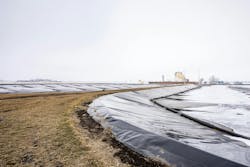
The most recent phase added a fourth anaerobic lagoon, third aeration basin, fourth blower and third final clarifier, along with a new RAS pump station and ultraviolet (UV) disinfection system that eliminates chlorine use and minimizes chemical handling. The upgrades increased overall capacity to 24 MGD, with infrastructure designed to support future expansions. Innovations such as ESADs – uncommon in municipal facilities – optimize solids stabilization and minimize maintenance, while the robust biogas system can produce up to 325,000 cubic feet of natural gas daily.
Together, these improvements enable the Fremont WWTP to support billions in industrial investment, including new poultry and pork processing facilities that have been a boon to the local economy and job market.
"The new facilities and expansions are expected to have a $1.2 billion economic impact on eastern Nebraska and create 800 new jobs," Seelhoff said. "The City maintained good communication with each of the industrial users and public throughout the project to ensure success."
Completed on time and on budget, the project ensures Fremont’s wastewater infrastructure will meet community and industry needs for the next 20 years, fueling both sustainability and economic growth.
Read about the other 2025 Top Projects
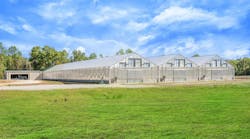 Summerville WWTP biosolids solar dryers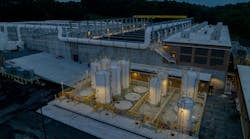
About the Author
 Alex Cossin
Alex Cossin
Associate Editor
Alex Cossin is lead reporter, staff writer and content strategist for Waterworld Magazine, Wastewater Digest, Stormwater Solutions and Water Technology. Cossin graduated from Kent State University in 2018 with a Bachelor of Science in Journalism. Cossin can be reached at [email protected].
 Bob Crossen
Bob Crossen
Bob Crossen is the vice president of content strategy for the Water and Energy Groups of Endeavor Business Media, a division of EndeavorB2B. EB2B publishes WaterWorld, Wastewater Digest and Stormwater Solutions in its water portfolio and publishes Oil & Gas Journal, Offshore Magazine, T&D World, EnergyTech and Microgrid Knowledge in its energy portfolio. Crossen graduated from Illinois State University in Dec. 2011 with a Bachelor of Arts in German and a Bachelor of Arts in Journalism. He worked for Campbell Publications, a weekly newspaper company in rural Illinois outside St. Louis for four years as a reporter and regional editor. Crossen can be reached at [email protected].