Biosolids solar dryer enhances capactity and sustainability for Summerville WWTP
Key Highlights
- The solar dryer reduces landfill fees by an estimated 40–50%, freeing funds for future system improvements.
- Achieves up to 75% solids content in biosolids, significantly decreasing disposal volume and energy use compared to traditional methods.
- Construction prioritized safety, with over 68,000 work hours without incidents, including night shifts during high temperatures.
- Location: Summerville, South Carolina
- Cost: $13 million
- Owner: Summerville Commisioners of Public Works
- Partners: Harper General Contractors, KCI Technologies
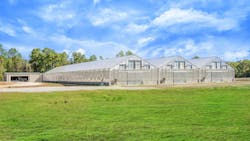
One of only three of its kind in the Southeast U.S., Summerville WWTP’s biosolids solar dryer is a focal point for the utility’s sustainable waste management practices.
The Summerville Commissioners of Public Works commissioned Harper General Contractors and KCI Technologies to design and construct this $13 million project, the goals of which included improvements to biosolids processing and reductions in landfilling costs. The plant identified that reducing the excess water in the biosolids sludge could reduce the total weight of each haul to save money on tipping fees, which primarily use weight for pricing.
“The resulting cost savings are substantial, landfill fees have been reduced by an estimated 40–50%, freeing up operating funds for future system improvements and maintenance investments,” said Anthony Taylor, regional director for Harper General Contractors.
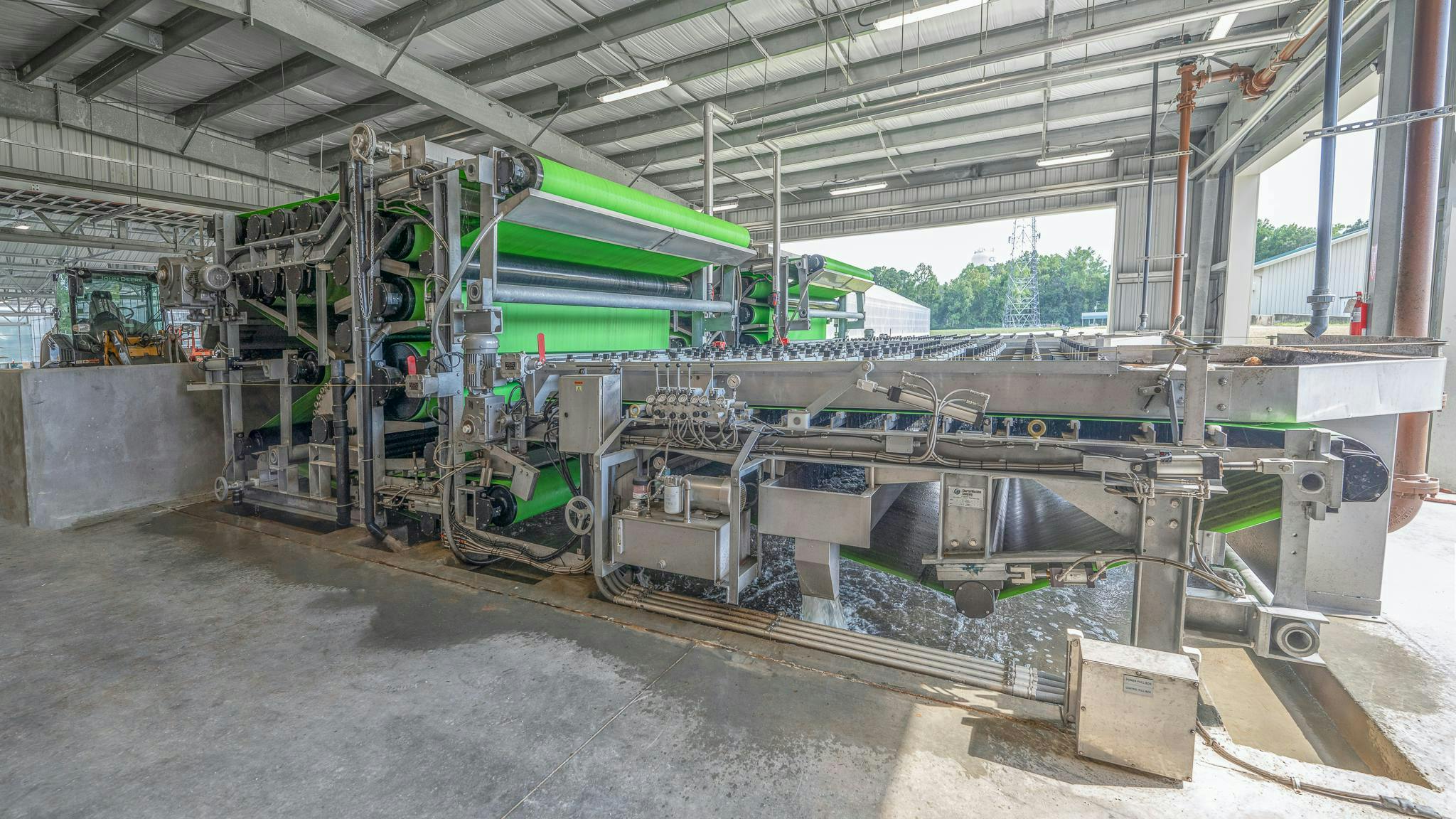
With this goal in mind, the contractor and designer constructed a solar dryer facility and installed two belt presses. Depending on seasonal conditions, this design allowed the facility to achieve up to 75% solids. This is done through natural heating from the sun in enclosed greenhouse style building with controlled ventilation. The biosolids are mixed or turned regularly to accelerate evaporation while exposed to sunlight.
“The Summerville WWTP biosolids solar dryer is one of only three systems of its kind in the Southeast, representing a major step forward in sustainable wastewater treatment,” Taylor said. “Over a 2 to 6 week cycle, depending on seasonal conditions, the sludge achieves up to 75% solids content. This greatly reduces the volume of material requiring disposal while lowering energy use compared to conventional thermal drying systems.”
Operationally, the plant is finding as much success as the project did during construction. Of particular note is the culture of safety that led to more than 68,000 total work hours without a single OSHA recordable incident and no time lost on accidents. When summer temperatures threatened worker safety — temperatures inside the greenhouses could average between 100 and 140ºF — the contractor implemented night shifts for several months. Additionally, daily meetings instilled a culture that prioritized safety without losing sight of the project timeline.
“Harper implemented comprehensive pre-task planning sessions, daily safety briefings, and continuous oversight by both field supervision and safety personnel,” Taylor said. “Partnering closely with trade partners ensured every team member shared ownership of the safety plan, fostering an environment where speaking up and looking out for one another was standard practice.”
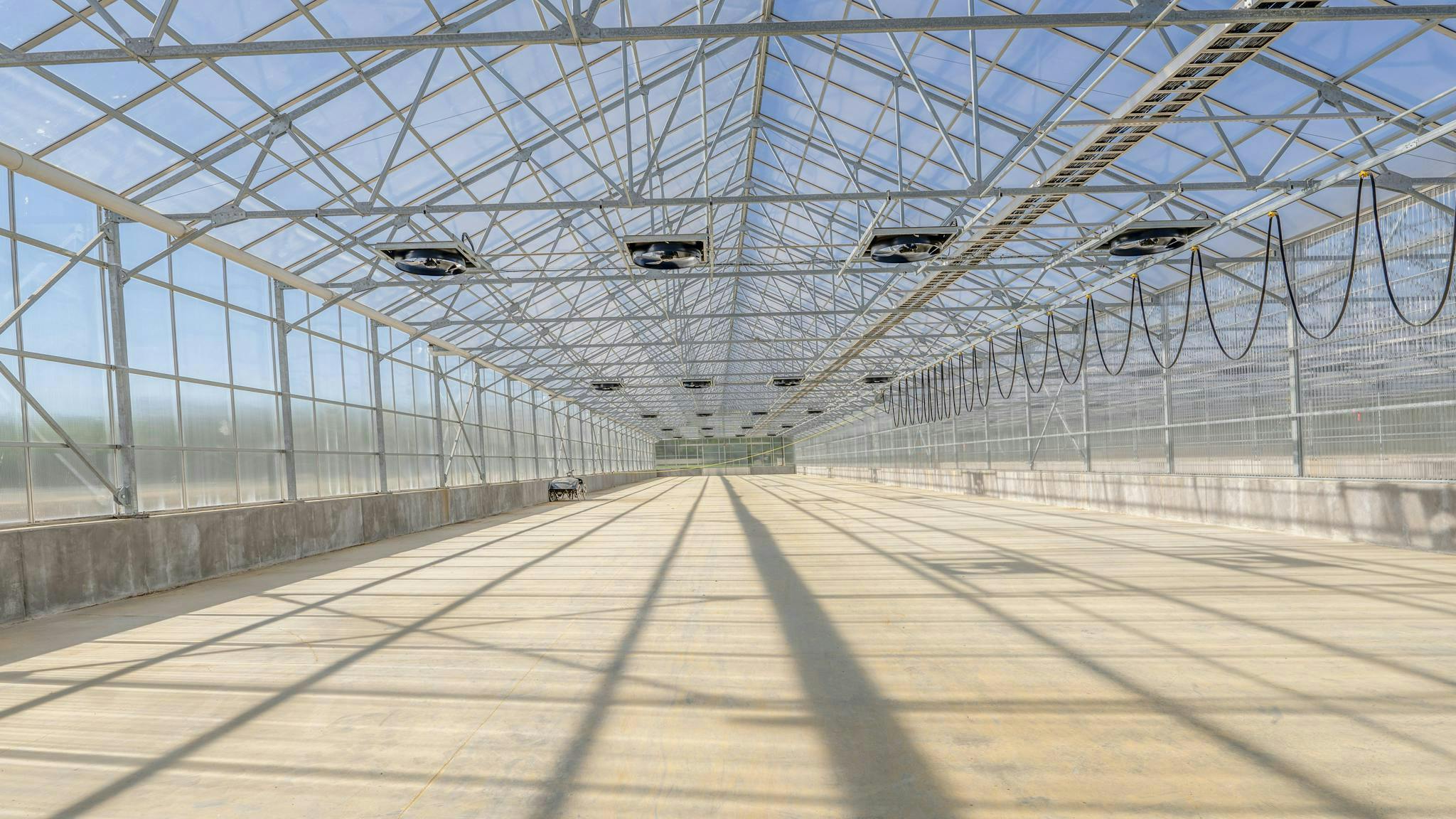
Through the use of laser scanning and 3D modeling, the building information technology used in the design phase optimized construction while eliminating foreseeable conflicts and issues before construction began. One such area of focus were dead zones in the solar dryers that could lead to odor issues or unoptimized drying of the biosolids.
This also meant that when pouring concrete on site, the concrete contractor used a laser screed and laser scanning to ensure tolerances between slabs were sufficiently tight to mitigate any odors while achieving the promised drying performance.
In the end, the system enhances capacity and efficiency to position the community to handle population growth.
“The improvements also help SCPW stay ahead of evolving environmental regulations by producing cleaner, more manageable end products that meet stricter disposal standards,” Taylor said. “Overall, the project future-proofs the wastewater treatment process, ensuring reliability, compliance, and resilience for years to come.”
About the Author
 Bob Crossen
Bob Crossen
Bob Crossen is the vice president of content strategy for the Water and Energy Groups of Endeavor Business Media, a division of EndeavorB2B. EB2B publishes WaterWorld, Wastewater Digest and Stormwater Solutions in its water portfolio and publishes Oil & Gas Journal, Offshore Magazine, T&D World, EnergyTech and Microgrid Knowledge in its energy portfolio. Crossen graduated from Illinois State University in Dec. 2011 with a Bachelor of Arts in German and a Bachelor of Arts in Journalism. He worked for Campbell Publications, a weekly newspaper company in rural Illinois outside St. Louis for four years as a reporter and regional editor. Crossen can be reached at [email protected].