Bigger loads, tighter limits: Rethinking wastewater treatment plants
Key Highlights
- The Western Treatment Plant is expanding capacity by 15% with the 5W NRP, utilizing energy-efficient shortcut nitrogen removal to meet environmental and operational goals.
- Implementation involved extensive pilot testing, advanced modeling, and close collaboration between Melbourne Water and industry partners to ensure process reliability at full scale.
- Design choices, such as circular bioreactor tanks, reduced construction materials and emissions, exemplifying sustainable infrastructure development.
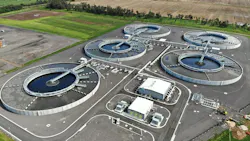
Modern wastewater treatment plants are expected to fulfil the same functions they always have – safely treat wastewater, meet discharge limits and run continuously.
However, they face an evolving operating environment, and one of the factors that water authorities need to contend with is population growth. As urban centers expand, existing wastewater infrastructure must meet this increasing demand, with the result that higher flow volumes move through their systems.
Increasing loads caused by population growth is impacting Melbourne’s Western Treatment Plant. Owned and operated by Melbourne Water, it is Australia’s largest wastewater treatment facility. With the city’s population set to grow to around nine million residents by 2050, wastewater volumes at the facility are expected to nearly double.
As the population served by the plant increases, Melbourne Water planned for this demographic growth. They had a vision for the Western Treatment Plant to explore carbon-efficient nitrogen removal and limit the effluent total nitrogen loads to Port Phillip Bay – a key requirement under the terms of their Environmental Protection Agency (EPA) licence.
It was also important to maintain near energy neutrality for the site, particularly as Melbourne Water adopted a Net Zero GHG emission target by 2030, including a 100% renewable energy target by 2025.
A novel approach to nutrient removal

Melbourne Water’s Western Treatment Plant shows how facilities are responding to nitrogen removal and net zero challenges. It also provides a roadmap for water authorities to shape the next generation of wastewater upgrades.
As part of its commitment to remove nutrients, and specifically nitrogen, Melbourne Water investigated options for carbon-efficient nitrogen removal processes, identifying mainstream de-ammonification in the early 2010s as a potential augmentation process for this upgrade.
Implementing a conventional approach would have raised carbon demand and energy use, an undesirable impact for a site that was close to becoming energy neutral.
Melbourne Water needed to find a way to add capacity while keeping the system aligned with long-term operating and sustainability goals.
The result is the 5 West Nutrient Removal Plant (5W NRP) at the site. Now in its integration and optimisation phase, it adds 150 megalitres per day of treatment capacity, equal to about 15% of Melbourne’s wastewater.
Building on a successful shortcut nitrogen removal (SCNR) trial undertaken at the site between 2017 and 2020, the facility has adopted nitrogen removal through the nitrite shunt pathway process.
Conventional biological nitrogen removal takes place over two phases. First, nitrification converts ammonia to nitrite and then nitrate. Second, denitrification converts nitrate back through nitrite to nitrogen gas, which is released to the atmosphere.
Shortcut nitrogen removal (SCNR) via the nitrite shunt pathway streamlines that sequence. It stops nitrification at the nitrite stage and converts ammonia to nitrogen gas through the nitrite shunt pathway, without fully converting nitrite to nitrate. That difference matters because nutrient removal is one of the most energy- and carbon-intensive processes of wastewater treatment.
At the 5W NRP, the process is expected to reduce carbon required for nitrogen removal by about 40% and treatment energy demand by about 30%. Additional carbon can be diverted to biogas production for renewable energy generation. In practical terms, the process is doing more than increasing capacity. It is reducing the operating penalty that often comes with expansion.
Transitioning from trial to full implementation
Moving shortcut nitrogen removal from a successful trial at 160kL/d to a full-scale plant needed a clear implementation plan. Trial results had to be tested and validated against day-to-day plant conditions because wastewater changes throughout the year.
Temperature can affect biological activity, and nitrogen and carbon concentrations can shift with rainfall, upstream network conditions, the mix of domestic and industrial flows entering the plant, and the performance of primary treatment processes.
For the process team and operators, that meant testing and fine-tuning the process through wet-weather peaks, lower-temperature periods, maintenance constraints and changes in influent strength. Aeration controls and monitoring setpoints then needed to be adjusted before the process becomes an integral part of the plant’s operations.
Lessons learnt during the SCNR trial at the Western Treatment Plant were integrated into the design roadmap for the implementation of the nitrite shunt pathway at what would become one of the world's first full-scale shortcut nitrogen removal plants.
Advanced wastewater treatment modeling software and advanced aeration controls were used to carry those trial results into full-scale operation. For shortcut nitrogen removal, full scale exposes conditions a trial can only partly test. The process must keep responding as flows, loads and operating constraints change.
The importance of partnership
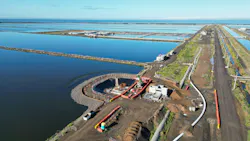
The 5W NRP underlines the importance of partnership across a project team. Detailed design, commissioning support and operational input need to work seamlessly, with the utility and solutions provider working as integrated partners throughout.
That collaboration was pivotal at the 5W NRP because the nitrite shunt pathway is a novel treatment process with greater effort required to design and assess risk compared with a conventional process. Adding to the project’s complexity was the fact that it had to be integrated into an active system, not delivered in isolation.
To manage the risk of moving from a 160 kL/d pilot trial to full scale 150 ML/d plant, Melbourne Water engaged an industry-leading solutions provider to undertake detailed design with the contractor. This approach provided Melbourne Water with a highly collaborative partnership in the detailed design phase. It also provided them with confidence at every step in the journey from pilot scale to full scale, continuing the approach from the SCNR pilot design and operational period.
Construction on active wastewater sites poses a unique set of challenges. Temporary works, confined access, odour management, testing and commissioning need to be sequenced around ongoing treatment obligations. Failure to plan adequately for these considerations puts project elements at risk and places a greater strain on operations.
At the 5W NRP, the design plan prioritised construction efficiency while minimising the operational burden. As a result of the upgrade being delivered within an operational treatment site, less material, fewer interfaces with existing systems and clearer construction sequencing helped reduce delivery risk.
The project uses five 85-metre diameter bioreactor tanks in a circular ‘donut’ configuration with an integrated clarifier. This design reduced concrete use by approximately 50%, with associated reductions in Scope 3 emissions from construction materials.
The broader lesson is that adopting novel treatment processes requires vision, long-term strategic planning, collaborative processes and teams working together to ensure the process design is faithfully delivered in the design, construction and commissioning phase. This continues in operating, fine tuning and proof of performance for the new process.
Supporting shifts in infrastructure planning
For utilities planning the next wave of upgrades, the 5W NRP provides valuable lessons. Treat trials to understand scale, not just prove a concept. When a new biological process is added to an existing treatment plant, operators need time, data and support to get it running steadily. Constructability needs early attention, because work on a live site must be planned around ongoing treatment and limited shutdown windows.
Those steps support new treatment approaches to become dependable processes – and help utilities to modernise without adding burden that is difficult to sustain. The 5W NRP also points to a wider shift in how wastewater infrastructure is being planned. Utilities are increasingly expected to operate facilities as water, energy and resource recovery hubs, not just treatment plants.
That does not mean every project needs to do everything. It does mean energy efficiency, carbon recovery and process performance require connected decisions. Aeration, nutrient removal, biogas production and long-term operating cost all influence one another, so design teams must think beyond the immediate treatment steps and consider the entire site’s performance.
Melbourne Water’s 5W NRP shows what is possible when operational insight, process innovation and integrated delivery come together from the start.
About the Author
 Aprilia Vellacott
Aprilia Vellacott
Aprilia Vellacott is Jacobs’ Technical director, Wastewater for Australia and New Zealand, with specialist experience in advanced wastewater treatment processes. Her expertise spans carbon and energy-efficient design, greenhouse gas emissions reduction and supporting the transition to circular, low-carbon water solutions.
 Josh Kar
Josh Kar
Josh Kar is a Senior Project Manager at Melbourne Water, specialising in the delivery of complex multi-stakeholder utility and environmental infrastructure initiatives predominately at the Western Treatment Plant.