Cost-effective strategies for managing grease and odors in municipal wastewater systems
Key Highlights
- Mandeville faced persistent grease buildup in lift stations, leading to odors, flies, and costly cleanouts, especially along the restaurant corridor with over 60 eateries.
- A pilot installation of Kasco's HydraForce Lift Station Agitator introduced fine bubbles and circulation, quickly improving grease breakdown and reducing odors, with visible results within days.
- The new approach allowed the city to cut costs by discontinuing expensive bacterial additives, saving approximately $54,000 annually, and reducing labor hours for grease removal.
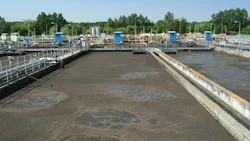
In a wastewater lift station, the biggest problems often develop out of sight.
Grease, fats, oils, and solids can quietly accumulate beneath the surface, forming stubborn floating caps that create odors, attract flies, and force operators into a frustrating cycle of repeated cleanouts. For utilities managing dozens of lift stations, the labor and equipment costs quickly add up.
That was the situation facing Mandeville, a city of roughly 13,000 residents on the north shore of Lake Pontchartrain. With 64 lift stations across its collection system, Superintendent of Water and Wastewater Jacob Groby III knows how persistent grease problems can become when conditions allow them to build.
But after introducing a new aeration approach in one particularly troublesome station, Groby began seeing results that suggested a different path forward.
Managing grease across a growing system
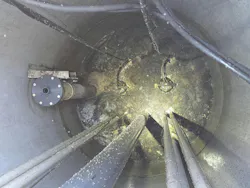
Like many utilities, Mandeville’s wastewater department has a handful of lift stations that demand far more attention than others.
“We have four really bad ones,” Groby said during a recent interview. “Those are the stations where we spend hours cleaning grease out.”
Many of those issues occur along what Groby describes as the city’s “restaurant corridor.” Mandeville has more than 60 restaurants within its sewer service area, and the resulting fats, oils, and grease inevitably find their way into the system.
Residential habits also contribute to the problem, particularly in large apartment complexes where wastewater managers have little control over what residents send down the drain.
“All of that ends up in my lift station,” Groby explained. “And then we’re the ones who have to deal with it.”
When grease accumulates in the wet well, it forms thick layers that interfere with mixing and create conditions for odor and insect problems. The typical solution involves sending a vacuum truck and a multi-person crew to physically remove the buildup.
To understand the scope of the issue, Groby reviewed the department’s maintenance records.
“I pulled six months of data from our reports,” he said. “On just four stations, we had 112 hours spent cleaning grease.”
Operating a vacuum truck usually requires a four-person crew along with a supervisor. When Groby calculated the labor costs alone, the numbers were significant.
“That was about $6,700 in man-hours over six months,” he said. “And that’s not even counting diesel, wear and tear on the truck, or anything else.”
Applying familiar science in a new place
Groby’s perspective on wastewater management is shaped by decades of experience.
Before coming to Mandeville, he spent 40 years working in nearby St. Bernard Parish, where large treatment plants rely heavily on aeration to keep biological processes functioning efficiently.
“The whole process is about keeping the bacteria healthy,” Groby said. “If they have oxygen, they stay active and they consume the waste.”
Fine-bubble aeration is a standard technology in treatment plants, where diffusers introduce oxygen into wastewater to support aerobic bacteria. But Groby had never seen the same principle applied directly in lift stations.
That changed after he encountered the idea at WEFTEC, the industry’s largest annual gathering of water professionals. After discussions with equipment representatives, Groby agreed to test the concept in one of Mandeville’s most challenging stations.
The system he installed was the HydraForce Lift Station Agitator from Kasco, which introduces fine bubbles into the wet well while gently circulating the water column.
Before the system was installed, however, Groby wanted to eliminate the existing buildup.
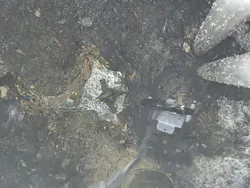
“The grease cap was so thick it couldn’t overcome it at first,” he said. “So we vacuumed the station out, pressure-cleaned it, and started fresh.”
Rapid results
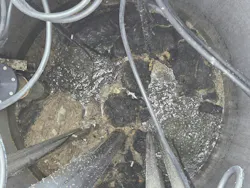
After the station was cleaned and the unit was installed, Groby began monitoring the results closely.
“I started taking photos every few days,” he said. “Just to see what was happening.”
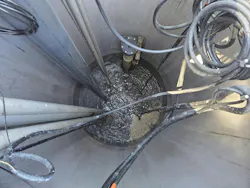
The difference became apparent quickly. Instead of forming a heavy grease layer at the surface, the waste remained mixed throughout the water column, allowing naturally occurring bacteria to break it down.
“The only things left floating are the materials that won’t digest,” Groby said. “Little pieces of plastic or other incidental debris.”
The change produced another immediate benefit: odor reduction.
“When you don’t have that grease cap forming, you get a big drop in odor and flies,” he said.
That improvement is particularly important because Mandeville is simultaneously upgrading its odor control infrastructure. The city has begun installing charcoal filtration units at lift station vents to prevent sewer gases from reaching surrounding neighborhoods.
By reducing grease buildup at the source, Groby expects the aeration approach will also extend the life of those filtration systems.
“If the station isn’t producing as much odor in the first place, the charcoal units last longer,” he said.
Eliminating unnecessary costs
When Groby arrived in Mandeville, one of his first priorities was evaluating whether existing treatment strategies were delivering measurable benefits.
He soon discovered the city had been paying for a bacterial additive intended to break down grease in the system.
The monthly cost was $4,800.
“When I dug into it, the dosing rate was extremely small,” Groby said. “They were feeding about 1.3 milliliters a minute.”
After reviewing the product’s claims and performance data, he decided to discontinue the program.
“That saved us about $54,000 a year right away,” he said.
For Groby, the experience reinforced an important lesson for wastewater utilities.
“You’ve got to make vendors prove their products work,” he said. “Otherwise you’re just kicking the problem down the road.”
Expanding the approach
The initial results convinced Groby that aeration could significantly reduce maintenance demands across the city’s collection system.
Mandeville will soon install four additional units at the lift stations with the worst grease accumulation, and Groby has already included plans for additional purchases in the city’s capital budget.
“I’ll probably end up with around 30 units total,” he said.
Because the systems operate on standard 110-volt power and require minimal maintenance, installation is relatively simple. Routine upkeep generally involves checking and occasionally cleaning an air filter during regular lift station inspections.
“They’re easy,” Groby said. “You plug them in and they work.”
A regional opportunity
Groby has also begun sharing the results with neighboring wastewater utilities throughout St. Tammany Parish.
Communities such as Covington, Abita Springs, and Slidell operate similar systems and face many of the same grease challenges.
When Groby shows colleagues the before-and-after photos from the pilot station, their reactions are immediate.
“They can see the difference right away,” he said.
For utilities that operate with tighter budgets, the potential labor savings may be the most compelling factor.
“If you really crunch the numbers, the unit pays for itself quickly,” Groby said. “Probably in about three months.”
Letting biology do the work
At its core, the approach succeeds because it supports the natural biological processes already present in wastewater.
By introducing fine bubbles and keeping the wet well gently mixed, the system increases dissolved oxygen levels and encourages aerobic bacteria to remain active.
“The more dissolved oxygen you have, the fresher the water,” Groby explained. “And the bacteria are happier.”
Those microorganisms then consume much of the organic material that would otherwise accumulate as grease.
For Groby, the concept reflects a simple principle that wastewater professionals understand well.
“Keep the bacteria healthy and they’ll do the work for you,” he said.
As Mandeville continues expanding the technology across its lift stations, Groby expects operators will spend less time battling grease buildup and more time focusing on system improvements.
And for utilities looking for practical, cost-effective solutions, the results offer a reminder that sometimes the most effective innovations come from applying familiar science in a new place.
About the Author
Bethany Thompson
Bethany Thompson is the municipal sales territory manager for Kasco.