From phenomena to practice: Modern strategies for reliable Bio-P systems
Key Highlights
- Proper sizing and protection of the anaerobic zone are critical for consistent VFA production and PAO selection, with an anaerobic mass fraction of 15-25% being optimal.
- Eliminating oxygen and nitrate leaks in the anaerobic zone ensures effective VFA uptake by PAOs, which is essential for phosphorus removal efficiency.
- Providing the right carbon source, especially VFAs, and controlling SRT are key to optimizing Bio-P performance and preventing PAO washout.
- Implementing sidestream fermentation (S2EBPR) enhances stability in low-carbon influents and reduces operational variability, making it suitable for challenging conditions.
- Integrating polishing and resource recovery options, such as chemical polishing and struvite precipitation, ensures compliance with ultra-low phosphorus limits and supports circular economy goals.
Biological phosphorus removal (Bio-P) and enhanced biological phosphorus removal (EBPR) in wastewater treatment plants has traveled a long arc, from a curious observation of “luxury uptake” to a portfolio of robust, lower-carbon designs capable of sub-0.1 mg/L effluent phosphorus with chemical polishing only as insurance. What follows traces that journey, clarifies the scientific drivers that reshaped practice, and distills what it takes to design a reliable Bio-P system today, and why certain configurations are now most often specified.
A compressed history of phosphorus control
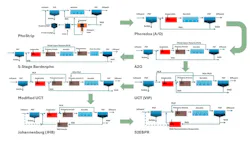
Before the 1970s, most phosphorus control relied on chemical precipitation with iron or aluminum salts. Although effective, these methods generated large sludge volumes, added operational cost, and decoupled phosphorus from potential recovery pathways. Engineers first noticed that activated sludge could both release and later take up phosphorus in excess of growth needs, referred to as “luxury uptake.” Early structured studies by Levin & Shapiro (mid-1960s) led to PhoStrip, a sidestream process that intentionally strips phosphorus in an anaerobic tank and removes it chemically in a separate step; this hybrid approach demonstrated the power of cycling biomass through anaerobic then aerobic conditions and seeded the modern EBPR concept.
 Dr. James Barnard
It was James Barnard, working in South Africa in the early 1970s, who initiated the transformation of early observations into a defined mechanistic biological process. At the Daspoort pilot plant in Pretoria South Africa, Barnard configured a continuous-flow system where mixed liquor passed through anaerobic, anoxic, and aerobic zones in sequence. He demonstrated that this redox pattern supported both phosphorus and nitrogen removal, leading to the Phoredox (or A/O) process, the first mainstream design to introduce a defined anaerobic zone ahead of aeration.
The A/O configuration proved that polyphosphate-accumulating organisms (PAOs) could thrive when volatile fatty acids (VFAs) were available and the anaerobic zone was protected from oxygen and nitrate. However, after the implementation of full-scale operators soon found that nitrate recirculation from the aerobic zone could compromise anaerobic conditions. This prompted development of the A2O process (anaerobic–anoxic–aerobic) in late 1970s, followed in the early 80s by 5-stage Bardenpho, which added an intermediate anoxic zone to intercept recycled nitrates and restore truly anaerobic conditions at the head of the system.
In the 1980s, researchers at the University of Cape Town (UCT), notably Wentzel, Ekama, Marais and Dold, advanced biological nutrient removal modeling and refined these designs. The UCT process redirected return activated sludge (RAS) to the anoxic rather than the anaerobic zone, minimizing nitrate leakage. Its successor, the Modified UCT (MUCT), added internal recycling from the anoxic to the anaerobic stage, further improving nitrate control and stability.
These UCT-based configurations became the foundation of modern EBPR, particularly where both nitrogen and phosphorus removal were required. Around the same period, the Johannesburg (JHB) process was introduced to manage higher nitrate loads and better separate carbon sources. Collectively, the Phoredox, A/O, A2O, 4- and 5-stage Bardenpho, UCT, MUCT, and JHB systems represent a continuous lineage of EBPR evolution, each iteration refining how engineers manage internal recycles, nitrate transport, and carbon distribution to favor PAO selection
By the late 2000s–2010s, new drivers (stricter limits, carbon scarcity, energy goals) catalyzed sidestream EBPRS (S2EBPR): fermenting return activated sludge (RAS) or mixed liquor in a controlled sidestream to generate VFAs and extend “effective anaerobic exposure,” improving stability especially for weak influent carbon. Full-scale surveys and side-by-side pilots show S2EBPR can deliver more stable phosphorus removal than conventional EBPR under challenging influent conditions, such as severe wet weather conditions, when the wash-out possibility of PAOs responsible for Bio-P process is significant.
How the EBPR scientific foundation has changed professional wastewater practices
At heart, EBPR is a selector game. It aims to create a true anaerobic zone where PAOs can store VFAs as Polyhydroxyalkanoates (PHAs) using intracellular poly-P and glycogen as energy sources. Then in aerobic/anoxic zones it repays that “energy debt,” rebuilds poly-P, and sequesters P to solids. This phenomenon is called phosphorus accumulating mechanism (PAM).
Keeping nitrate and oxygen out of the anaerobic zone is essential; recycled electron acceptors allow ordinary heterotrophs to consume fermentable chemical oxygen demand (COD), starving PAOs of the VFAs they need and suppressing phosphorus release/uptake. Quantitatively, every 1 mg O₂ recycled consumes ≈3 mg COD of fermentable substrate, and every 1 mg NO₃-N recycled consumes ≈2.86 mg COD, COD that no longer becomes VFA for PAOs.
The microbiology picture has also evolved. For years, practice implicitly centered PAOs such as “Candidatus Accumulibacter” and feared competition from glycogen accumulating organisms (GAO), a competing microorganisms for taking up carbon while not performing PAM. High-resolution community studies now argue for a broader cast, e.g., Tetrasphaera can be as important as Accumulibacter in full-scale EBPR process; and “GAO takeover” is not inevitably fatal, particularly in warm climates when design and operation are adequate. This reframing pushed designers to focus less on “organism control” and more on process environment control (anaerobic fraction, exposure time, carbon form), which consistently tilts selection toward EBPR-favorable guilds.
Finally, the stoichiometry and kinetics have been sharpened by decades of research and full-scale synthesis. Practical ranges emerged for readily biodegradeable chemical oxygen demand to phosphorus (RB-COD:P) and volatile fatty acids to phosphorus (VFA:P) ratios, alongside empirical design targets for anaerobic mass fraction and solids retention time (SRT) that correlate strongly with performance:
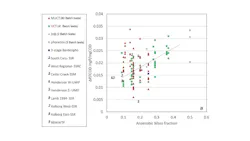
- Anaerobic mass fraction of ~15–25% is a sweet spot for consistent removal at ~0.02 mg of phosphorus per mg influent of COD, if the influent COD is above 400 mg/L and as low as 10% when the influent COD is as high as 700 mg/L.
- SRTs beyond what is needed for nitrification tend to depress Bio-P yield, meaning less phosphorus is sent to waste activated sludge (WAS).
Why Bio-P surged again and today's drivers for adoption
Regulatory limits on total phosphorus continue to tighten and occasionally face very stringent seasonal or annual <0.1 mg/L total phosphorus (TP) goals; chemical-only paths can be expensive (reagents and residuals) and operationally brittle at ultra-low levels. Modern EBPR offers a carbon-lean, energy-sensible backbone that:
- Minimizes coagulant dependence,
- Reduces sludge production, and
- Pairs well with phosporus recovery (struvite) or “polish-on-demand.”
The sustainability and operational expense (OPEX) drivers explain why both optimized conventional EBPR and S2EBPR have continued their mainstream applications in meeting stringent phosphorus limits.
What it takes to design a reliable Bio-P system
1. Protect and size the anaerobic zone properly.
The anaerobic reactor is not just a “box within A2O.” Its fraction of system biomass and hydraulic/solids exposure determine whether the process reliably generates and/or consumes VFAs and selects PAOs. Evidence across configurations shows a linear positive relationship between anaerobic mass fraction and phosphorus removed; targeting ~15–25% of sludge mass under anaerobic conditions is consistently associated with strong Bio-P yields.
2. Engineer out “oxygen and nitrate leaks”
Keep the anaerobic zone truly anaerobic by managing internal recycles, sludge return hydraulics, and mixing. Even modest oxygen/nitrate back-mixing diverts fermentable COD away from VFA formation and PAO uptake. Recycle placement and the UCT/MUCT/JHB family exist largely to solve this.
3. Provide enough of the right carbon, prefer VFAs (acetate/propionate) or routes that make them.
Rules of thumb: VFA:P of ~6–14 g/g or RBCOD:P ≥16:1 are commonly cited working ranges for low effluent TP; exact needs depend on yield assumptions and temperature. When influent is weak or variable, consider strategies to make your own VFAs through primary fermentation, RAS fermentation (S2EBPR), or targeted supplemental carbon (e.g., glycerol where validated).
4) Choose SRT deliberately rather than “the longer, the safer”
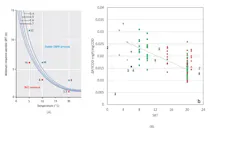
Beyond the minimum for nitrification and PAO maintenance (site-specific; often ~6–10 d in temperate plants), longer SRTs can depress Bio-P performance by reducing phosophorus removal via wasted sludge. Several full-scale syntheses show a negative correlation between SRT and phosphorus removed once the minimum is met, avoid “comfort-SRTs” of 15–25 d unless compelled by other objectives.
While excessively long solids retention times (SRTs) can suppress phosphorus removal efficiency, EBPR also requires a minimum SRT to prevent PAO washout. As shown in Figure 3 (below), stable EBPR activity is sustained only when the aerobic SRT exceeds the minimum required for PAO growth, which depends strongly on temperature and PHA storage capacity of the culture. At lower temperatures (<10 °C), the minimum aerobic SRT can rise above 10 to 12 days, whereas at warmer conditions (20 to 25 °C) values as low as 2 to 3 days are sufficient to maintain an active PAO population.
5) Decide where to implement the fermentation “engine”
Two robust patterns now dominate specs for these systems:
- Optimized conventional EBPR (A2O/UCT/MUCT/JHB) with adequate anaerobic fraction, tuned recycles, and primary fermentation. Many facilities can meet low TP with this alone when influent COD:P is reasonable and anaerobic design is respected.
- S2EBPR add-on for carbon-poor or variable influents. Controlled sidestream RAS fermentation extends anaerobic exposure and dampens influent swings. Multi-plant surveys and pilots indicate more stable phosphorus control in S2EBPR facilities versus conventional EBPR under weak-carbon conditions.
6) Integrate polishing and recovery as “guardrails,” not crutches
To meet ultra-low limits or handle shocks, allow space and piping for chemical trim (e.g., post-secondary metal salts) and phosphorus recovery (struvite). This keeps day-to-day OPEX low while providing a safety net and circular-resource upside.
What is the most common Bio-P process now, and why?
A2O → UCT/MUCT and related process family remain the default for many utilities. They are well understood, flexible, and effective when anaerobic fraction and nitrate control are diligently designed. Designers can deploy these layouts in compact footprints with internal recycle control and mixing strategies.
S2EBPR has rapidly moved from “emerging” to mainstream for weak-carbon plants. Utilities facing low influent RB-COD:P or seasonal variability specify sidestream fermentation because it produces VFAs from RAS due to biomass hydrolysis and fermentation, and increases effective anaerobic exposure without major footprint expansions. Full-scale surveys across North America report statistically more stable effluent phosphorus with S2EBPR compared with conventional EBPR, where the anaerobic mass fraction is below 10%, in these contexts.
Importantly, recent reviews caution that well-designed conventional EBPR can match S2EBPR performance when the anaerobic fraction and carbon pathways are right, underscoring that design quality often matters more than the label on the flow diagram.
Commercial implications: How to position a Bio-P program
Three ways to position a program for Bio-P emerge as starting points for utilities to get buy in from their customers and board include:
- Cost and resilience. EBPR reduces metal salt use and sludge production, with S2EBPR providing resilience to low-carbon influent. That creates attractive life-cycle economics and risk reduction for utilities managing seasonal shocks.
- Sustainability goals. A Bio-P backbone supports lower embedded carbon, resource recovery (struvite/MAP), and better compatibility with energy-neutral goals, key talking points in capital planning.
- Future-proofing. Designs that enshrine anaerobic integrity, flexible internal recycles, and optional sidestream fermentation make it easier to ratchet down to tighter TP without wholesale rebuilds.
References:
- Henze, Mogens, Mark C. M. van Loosdrecht, George A. Ekama, and Damir Brdjanovic, eds. Biological Wastewater Treatment: Principles, Modelling and Design. 2nd ed. London: IWA Publishing, 2008.
- Izadi, Iman, and Mehran Andalib. “Anaerobic Zone Functionality, Design and Configurations for a Sustainable EBPR Process: A Critical Review.” Science of the Total Environment 868 (2023): 161683. https://doi.org/10.1016/j.scitotenv.2023.161683
- Nielsen, Per Halkjær, Morten Seviour, and Wen-Tso Liu. “Microbial Ecology of Enhanced Biological Phosphorus Removal Processes: Insights from Full-Scale Systems.” Applied Microbiology and Biotechnology 103, no. 21–22 (2019): 8649–8668. https://doi.org/10.1007/s00253-019-10122-4
- Wentzel, M. C., G. A. Ekama, P. L. Dold, and G. v. R. Marais. Biological Excess Phosphorus Removal: Steady State Process Design. WRC Report No. 63/1/90. Pretoria, South Africa: Water Research Commission, 1990.
- Onnis-Hayden, Annalisa, et al. “Performance and Stability of Side-Stream Enhanced Biological Phosphorus Removal (S2EBPR) Processes: Full-Scale Evaluation.” Water Environment Research 92, no. 10 (2020): 1671–1685. https://doi.org/10.1002/wer.1418
- P. Dold and D. Conidi, Izadi et al., 2023 “Achieving enhanced biological P removal: Have we forgotten how to design a bioP plant?,” WEFTEC 2019 - 92nd Annu. Water Environ. Fed. Tech. Exhib. Conf., pp. 1452–1466, 2019
About the Author
Mehran Andalib
Wastewater National Practice Leader, Arcadis
Mehran Andalib is the National Wastewater Practice Leader at Arcadis, specializing in advanced biological nutrient removal, process modeling, and digital twin applications. With over 20 years of experience, he has led the development of innovative enhanced biological phophorus removal (EBPR) and side-stream fermentation systems, bridging microbial science with practical design to help utilities achieve sustainable, low-nutrient wastewater treatment.