Q&A: Aeration Basin Modifications Phase 1 project in San José
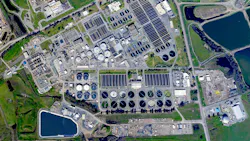
Brown and Caldwell was recently selected by the City of San José to provide owner’s advisor services for a major wastewater treatment upgrade aimed at modernizing infrastructure to meet new nutrient regulations.
The Aeration Basin Modifications Phase 1 (ABM1) project will take place at the San José-Santa Clara Regional Wastewater Facility, one of the largest advanced treatment plants in the western United States, serving approximately 1.5 million residents and 17,000 businesses.
Wastewater Digest editors compiled a list of questions about the project, which were answered by Anup Shah, P.E., vice president and senior director at Brown and Caldwell.
Q&A: Aeration Basin Modifications Phase 1 (ABM1) project

What specific regulatory or permit changes are driving the need for this upgrade? Could you describe what the new nitrogen removal limits mean in practical terms for the facility’s discharge requirements?
Anup Shah, P.E.: The Aeration Basin Modifications Phase 1 (ABM1) project is being driven by evolving regulatory requirements related to reducing nutrient discharge into the south San Francisco Bay. The San Francisco Bay Regional Water Board’s Nutrient Watershed Permit (Order R2-2024-0013), which covers all major municipal dischargers in the region, requires the San José-Santa Clara Regional Wastewater Facility to meet the updated Total Inorganic Nitrogen (TIN) limit by 2035.
To meet these increasingly stringent limits, the facility is currently advancing Capital Improvement Program (CIP) upgrades, specifically the ABM1project, which includes designing and constructing a dedicated TIN removal system within its existing biological nutrient removal batteries.
Why was this project prioritized as the largest capital endeavor in the City’s history compared with other infrastructure needs?
AS: ABM1 was prioritized as a critical infrastructure investment to help modernize and improve performance at the San José-Santa Clara Regional Wastewater Facility, one of the largest advanced wastewater treatment facilities in the western U.S. serving 1.5 million residents and 17,000 businesses in the Silicon Valley. The project is part of a broader Capital Improvement Program focused on maintaining reliable operations, addressing aging infrastructure and preparing the system to meet future treatment and regulatory needs.
The City was awaiting the new permit to be finalized before undertaking this project. Now with permit compliance certainty achieved, the City can confidently advance the ABM1 project to not only upgrade the biological nutrient removal process permit but also upgrade aging aeration basins and associated equipment.
What are the primary outcomes that success will be measured by and how is that being tracked?
AS: The project is intended to support long-term treatment performance, operational reliability and the facility’s ability to meet the permit required nitrogen removal and effluent discharge criteria. Brown and Caldwell and the City of San José will identify specific performance metrics, operational goals and permit compliance requirements for the design builder to achieve the desired project objectives. The City will rely on triple bottom line plus (TBL+) methodology to evaluate various alternatives presented by the design builder.
What are the biggest current operational or process challenges at the facility that this project is intended to resolve?
AS: Trying to upgrade the plant while keeping it operational is a major challenge. As Owner’s Advisor, Brown and Caldwell will gather input from the plant’s operations and maintenance team and other stakeholders and use that to develop key criteria for the project’s success. Thes criteria will be used to develop delivery expectations for the design builder during execution of the project.
What types of advanced process control improvements are expected, and what operational challenges will they address for plant staff?
AS: As Owner’s Advisor, Brown and Caldwell will support the City in evaluating and implementing process and operational improvements intended to enhance treatment performance, operational reliability and long-term facility efficiency as part of the ABM1 project.
Where do you expect the biggest energy efficiency gains to come from within the upgraded treatment processes?
AS: As wastewater treatment facilities modernize, some of the largest opportunities for energy efficiency improvements include modernization of the aeration diffusers, reduction in aeration requirements with process and controls upgrades and other process innovations.
As Owner’s Advisor, Brown and Caldwell will work with the City to help evaluate opportunities that support both treatment performance and long-term operational efficiency.
Why was a design-build delivery model selected for this project, and how does it benefit this kind of project?
AS: The project is being delivered using a design-build approach that aligns with the technical complexity, schedule and performance objectives associated with ABM1. It mitigates the massive risks associated with overhauling active, 24/7 critical infrastructure. Design build allows the contractor to suggest structural or mechanical optimizations before the blueprints are finalized, saving money and improving performance. Under a design-build contract, the design builder owns the design risk. Because they are pricing a design they helped create, they can provide a Guaranteed Maximum Price (GMP) much earlier in the process, locking in cost and schedule certainty for the City.
Furthermore, when facing strict regulatory deadlines—such as the new TIN limits under the watershed permit—the City needs to deploy advanced technologies quickly. Design-build allows specialized contractors to integrate their proprietary, cutting-edge systems directly into the project scope.
What is the role of the owner’s advisor on this project, and how does that role help support successful execution and outcomes?
AS: As Owner’s Advisor for ABM1, Brown and Caldwell will support the City throughout procurement and delivery by helping attract, procure and retain strong design-builder interest, providing business and technical guidance, fostering collaboration and innovation, and proactively managing project risks.
Brown and Caldwell’s OA team will help draft the performance criteria for the DB to meet, bridge the knowledge gap for the City, evaluate the DB’s proposed nutrient removal process, and support the City in validating the GMP.
How will the project be sequenced to maintain treatment performance and regulatory compliance during construction?
AS: Yet to be developed for this project.
What are the key milestones leading up to construction and through project completion?
AS: The design-builder selection comes first and then work is expected to begin Fall 2027, with project completion targeted for 2033/2034.
What lessons or best practices from this project can other utilities apply when planning similar upgrades to meet tighter nutrient limits?
AS: Start early. Collaborate with your Owner’s Advisor. Make decisions that stick. Provide maximum flexibility to the design builder to innovate.
About the Author
 Bob Crossen
Bob Crossen
Bob Crossen is the vice president of content strategy for the Water and Energy Groups of Endeavor Business Media, a division of EndeavorB2B. EB2B publishes WaterWorld, Wastewater Digest and Stormwater Solutions in its water portfolio and publishes Oil & Gas Journal, Offshore Magazine, T&D World, EnergyTech and Microgrid Knowledge in its energy portfolio. Crossen graduated from Illinois State University in Dec. 2011 with a Bachelor of Arts in German and a Bachelor of Arts in Journalism. He worked for Campbell Publications, a weekly newspaper company in rural Illinois outside St. Louis for four years as a reporter and regional editor. Crossen can be reached at [email protected].