Preserving biosolids value while planning for change
Key Highlights
- Land application of biosolids provides valuable nutrients and organic matter, supporting agriculture and soil health when managed properly.
- Emerging concerns about PFAS require source-specific planning, monitoring, and risk assessment to ensure safe land application practices.
- Utilities should design treatment processes that maintain flexibility, including digestion, dewatering, and drying, to adapt to regulatory and operational changes.
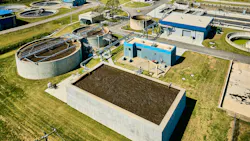
For decades, land application has allowed wastewater utilities to return nutrients and organic matter to productive soils rather than treating every ton of biosolids solely as waste. Properly managed programs can support agriculture, land reclamation and soil health while providing utilities with a beneficial-use outlet for material generated through an essential public service.
The scale of that role is significant. The most comprehensive recent national dataset, reflecting 2018 management practices, found that approximately 53% of U.S. biosolids were recycled to soils. The remaining 47% were landfilled, disposed of through other means or incinerated. Although those figures should not be treated as a current annual inventory, they illustrate how deeply beneficial use is embedded in the nation’s wastewater infrastructure.
Today, however, utilities face greater uncertainty. Public concern about per- and polyfluoroalkyl substances, or PFAS, is intensifying. State requirements continue to diverge and traditional outlets such as land application, landfill disposal and incineration are becoming more constrained, expensive or difficult to plan around.
Those concerns deserve serious consideration, but they are only part of the decision. Utilities must also understand what communities could lose if beneficial-use options disappear and what replacement pathways would require in terms of infrastructure, operating budgets, transportation, emissions and customer rates.
A resource with measurable agricultural value
The U.S. Environmental Protection Agency defines biosolids as sewage sludge that has been treated to meet applicable regulatory requirements and is intended for land application as a soil conditioner or fertilizer. Biosolids may be applied to agricultural land, forests, rangelands, reclamation sites and certain nonagricultural properties when they meet federal, state, Tribal and local requirements.
Rates must also reflect the nutrient content of the biosolids, crop requirements, soil conditions, field history and water-quality protections. In some situations, applying enough biosolids to meet a crop’s nitrogen needs can provide more phosphorus than the crop requires. One field study found that several biosolids treatments exceeded the phosphorus requirements of the crop being studied, reinforcing the need for site-specific nutrient management rather than uniform application rates.
The strongest land-application programs therefore begin with agronomy, not simply disposal. They connect material characterization with soil testing, crop demand, application timing, setbacks, runoff controls, recordkeeping and long-term monitoring. This allows utilities and agricultural partners to capture the value of nutrients and organic matter while addressing the potential for nutrient accumulation or migration.
PFAS requires source-based, site-specific planning
PFAS has become one of the most visible issues influencing biosolids policy. Wastewater treatment plants generally receive PFAS from upstream industrial, commercial and household sources. Treatment can transfer PFAS among liquid and solid streams, making source identification and upstream reduction important components of a biosolids strategy.
EPA’s current direction reflects that reality. In July 2026, the agency released draft guidance describing voluntary measures to reduce potential risks from PFOA and PFOS in biosolids. EPA recommends monitoring biosolids for PFAS, identifying likely industrial discharges and using industrial pretreatment requirements where appropriate. The draft guidance remains subject to public comment and potential revision, underscoring that the federal framework is still developing.
That uncertainty makes broad assumptions especially challenging. PFAS concentrations can depend heavily on the collection system, upstream dischargers and the sources contributing flow to a treatment facility. A utility receiving wastewater from industries historically associated with PFAS may face a different risk profile from one without those inputs.
Research also continues to evolve. A 2025 national study evaluated 23 land-application sites and reported median soil concentrations below 1 part per billion for four EPA-regulated PFAS analytes. The study found that most evaluated sites had relatively low potential for significant leaching, but it did not evaluate the effects of industrial inputs. National results can inform the discussion, but they cannot replace local source characterization, sampling and site-specific risk evaluation.
For utilities, the practical response is not to promise zero risk or assume that all land-application programs are equivalent. It is to build a defensible body of evidence around the material being produced, the land receiving it and the controls used throughout the management process.
 what_is_sludge_dewatering
The alternative is a aystem, not just a destination
When land application becomes restricted or unavailable, landfill disposal may appear to be the most immediate replacement. Its full cost, however, extends beyond the tipping fee.
Utilities must account for solids quantity, moisture content, hauling distance, fuel, truck availability, storage, receiving-site capacity and the reliability of third-party outlets. Wetter material generally means transporting more weight and volume. Longer hauling distances can increase transportation requirements and expose the utility to fuel-price, labor and contractor availability risks. Landfills may also change acceptance criteria or available capacity over the life of a wastewater facility.
Replacing land application can therefore require more than selecting another destination. It may trigger investments in storage, dewatering, drying, odor control or dedicated disposal capacity. It can also require new operating practices, staffing, permits and long-term contracts.
Thermal treatment presents its own considerations. Drying can reduce moisture, improve transportability and create a more stable product, but it requires capital, energy, air-quality controls, trained operators and a dependable outlet for the finished material. Incineration and emerging thermal processes must likewise be evaluated in the context of emissions requirements, residual management, energy demand, technology maturity and lifecycle cost.
The right comparison is not simply land application versus landfill or land application versus thermal treatment. It is the lifecycle performance of the complete system needed to make each pathway reliable.
Design the treatment process to preserve options
A resilient biosolids program starts inside the treatment facility. Thickening, stabilization, digestion, dewatering, storage and drying influence how much material a utility must manage, how it behaves and which outlets remain viable.
Anaerobic digestion can reduce volatile solids, help control odors and produce biogas that may support energy recovery. Dewatering reduces the amount of water transported with solids. Drying can further reduce weight and volume while creating a denser material that is easier to store and transport.
When digestion and drying are evaluated together, recovered biogas may offset a portion of the dryer’s energy demand and the reduction in solids can allow downstream equipment to be sized more efficiently. Planning can also reserve space for future drying capacity even when construction is deferred, allowing a utility to phase investment without eliminating a future option.
None of these processes determine the final outlet by itself. Their broader value lies in giving a utility time and flexibility. A well-stabilized, adequately dewatered material supported by sufficient storage is easier to redirect if weather, regulation, contractor performance or receiving-site availability disrupts the primary management pathway.
One effective planning model is to evaluate continued land application, landfill disposal, regional partnerships, advanced treatment and dedicated disposal facilities against a consistent set of criteria. Those criteria may include lifecycle cost, regulatory adaptability, implementation risk, operational resilience, permitting requirements and long-term control of disposal capacity. This moves the discussion beyond a single technology or outlet and helps utilities make decisions that remain defensible as conditions change.
In one use case, a biosolids strategy combined a review of landfill viability with an assessment of markets for beneficial-use products, technology screening, lifecycle-cost analysis and a phased implementation plan. The objective was not to predetermine the answer. It was to identify which combination of treatment and end-use options could best manage long-term cost, capacity and operational risk.
Build public understanding before decisions become urgent
Biosolids management is not only an engineering and compliance issue. It is also a public-trust challenge.
Utilities are in a stronger position when they communicate before a contract disruption, regulatory change or controversy forces an immediate decision. That communication should explain how biosolids are generated and treated, what testing is performed, how application sites and rates are selected, which organizations provide oversight and what happens if the existing outlet is no longer available.
It should also acknowledge uncertainty. Communities are unlikely to trust messaging that minimizes PFAS concerns or suggests the science is settled. A more credible approach distinguishes what is known, what remains under study and what the utility is doing to reduce risk.
At the same time, communications should make the tradeoffs visible. If an alternative would require substantially more hauling, new treatment equipment or greater dependence on limited landfill capacity, the community should understand those implications. Transparency means discussing both the potential risks of the current practice and the financial, operational and environmental effects of the alternatives.
From disposal planning to portfolio management
The most resilient utilities will be those that preserve options rather than depend indefinitely on a single outlet.
For some, that may mean continuing responsible land application while strengthening source control, monitoring, nutrient management and public engagement. For others, it may mean phasing in digestion, additional dewatering, drying, regional partnerships or dedicated disposal infrastructure. Many utilities may choose to maintain more than one viable outlet so a regulatory change, weather event, contract disruption or capacity constraint does not become an operational crisis.
Land application remains an important part of that portfolio. Its resource-recovery and soil-amendment value is substantial, but successful programs require disciplined management and a clear understanding of site-specific conditions.
The future of biosolids management should not be framed as a choice between defending the status quo and eliminating land application entirely. Utilities need a practical framework that weighs the documented value of beneficial reuse against local risks, identifies where additional evidence is needed and compares the full financial, operational and environmental implications of each viable pathway.
The question is not simply where biosolids should go. It is how utilities can manage them responsibly while protecting public health, maintaining public trust, controlling long-term costs and keeping essential wastewater service reliable. Viewed through that lens, responsible land application remains a valuable tool, but its strongest role is within a flexible, evidence-based biosolids strategy.
About the Author
John Bannen
John Bannen, Water/Wastewater Senior Engineering Operations Manager, STV
With over three decades working in plant operations and utility management in both the water and wastewater field, Bannen has held key leadership roles in both the public and private sectors with extensive experience managing wastewater treatment facilities as well as water distribution and wastewater collection systems. Bannen is a National Biosolids Partnership certified program auditor and at STV, Bannen serves as a senior technical advisor and operations manager, directly supporting communities in implementing sustainable water and wastewater infrastructure solutions as well as creating and implementing utility management programs.