Graduate research explores microbial drivers behind sludge bulking
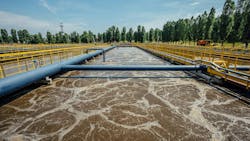
Gregor Posadas, a civil engineering graduate student at Boise State University, and Associate Professor Sondra Miller shared findings from their study, “Dissolved Oxygen Influences on Sludge Settleability: Mediating Role of the Volatile-to-Total Suspended Solids Ratio,” which examined how dissolved oxygen (DO) levels affect sludge settling at a full-scale wastewater treatment plant in Greenleaf, Idaho.
The team began investigating after the facility experienced sludge bulking. Their research found that higher dissolved oxygen levels were strongly linked to poorer settling performance. By tying operational data to microbial-level dynamics, the researchers identified measurable indicators that could help operators detect and address settling issues earlier.
The findings provide practical guidance for optimizing aeration and solids management — a key consideration as utilities face tighter discharge limits and emerging contaminant regulations, including PFAS and pharmaceuticals.
The work was presented at the Asia Conference on Environment and Sustainable Development, where the researchers highlighted the importance of cost-effective process improvements for modern wastewater infrastructure.