A more flexible approach to nutrient compliance
Key Highlights
- Utilities are focusing on targeted upgrades to improve nutrient removal performance without costly plant rebuilds.
- Variable-speed mixers and CFD modeling help optimize existing systems for better stability and energy efficiency.
- Operational flexibility, such as adjustable mixing, is crucial for adapting to tighter nutrient regulations and aging infrastructure.

For many wastewater utilities, nutrient removal has become one of the defining operational challenges shaping modernization decisions.
Across many states, wastewater facilities are under increasing pressure to reduce nitrogen and phosphorus discharges to protect waterways and downstream ecosystems while continuing to manage aging infrastructure, rising energy demands and constrained budgets. In many cases, treatment systems designed decades ago are now being pushed to operate under far more demanding regulatory and operational conditions than originally intended.
As nutrient limits tighten, facilities are being asked to achieve more stable treatment performance while also managing energy demand, maintenance requirements and equipment reliability.
That shift is changing how utilities think about modernization.
Historically, major treatment upgrades were often associated with large-scale expansion projects or full equipment replacement. Increasingly, however, utilities are looking more closely at operational bottlenecks within existing systems and whether targeted upgrades can improve nutrient removal performance without major reconstruction.
Why mixing matters
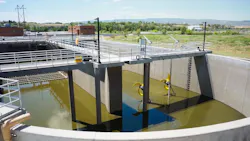
For facilities operating extended aeration systems, one of the most important process considerations is mixing.
Extended aeration systems remain widely used across smaller and medium-sized wastewater facilities because of their operational simplicity and reliability. However, maintaining stable nutrient removal performance under tighter permit requirements places greater demands on how these systems operate.
Mixing keeps solids suspended, distributes dissolved oxygen evenly and helps maintain the biological conditions needed for nutrient removal. When mixing systems cannot respond effectively to changing flows or operating conditions, process stability becomes harder to maintain.
Many older facilities still rely on fixed-speed equipment operating continuously at maximum output. While functional under stable loading conditions, these systems can become increasingly inefficient as nutrient targets tighten and operating demands evolve.
Facilities can then find themselves balancing competing operational priorities such as improving nutrient removal, controlling energy demand and managing maintenance requirements within systems that were not originally designed for that level of flexibility.
That was one of the operational issues facing the Clifton Sanitation District in Colorado.
The utility treats approximately 1.2 million gallons of wastewater per day using an extended aeration process and had been preparing for tighter nutrient removal requirements as Colorado continues strengthening nutrient management efforts to reduce nitrogen and phosphorus discharges into waterways.
At the same time, the facility’s drum mixers operated continuously at full capacity with limited ability to adjust mixing intensity as process conditions changed.
The facility was also operating at lower dissolved oxygen levels to improve nutrient removal performance, increasing the importance of maintaining stable and consistent mixing conditions throughout the treatment process.
As maintenance requirements increased and equipment reliability declined, the system became more difficult to optimize.

A smaller upgrade with bigger impact
Rather than pursuing a complete process overhaul, the Clifton team focused on identifying the specific operational constraint limiting performance.
The utility evaluated how mixing conditions affected nutrient removal and energy demand, then used computational fluid dynamics modelling to assess flow behaviour and identify where mixing coverage could be improved within the existing basin configuration.
The facility ultimately deployed variable-speed mixers alongside a Sanitaire fine-bubble aeration system supplied by Xylem. Nutrient sampling and mixer-speed adjustments were then used to determine the most effective operating range under live operating conditions.
This phased approach allowed the utility to validate operational improvements before committing to broader upgrades.
The results showed that stable mixing conditions could be maintained at lower power levels while improving the system’s ability to respond to changing operating demands.
 what_is_extended_aeration
More control, better performance
One of the more important lessons from Clifton was not simply the reduction in energy demand achieved through variable-speed mixing. It was the operational flexibility created by moving away from fixed operating conditions.
With greater control over mixing intensity, the facility improved coordination between aeration and mixing while reducing maintenance burden on aging equipment.
That kind of flexibility is becoming increasingly important as wastewater facilities adapt to tighter nutrient requirements using infrastructure that was not originally designed for today’s treatment expectations.
For many utilities, modernization is becoming less about rebuilding entire systems and more about identifying where operational constraints are limiting performance.
Addressing those constraints through targeted upgrades can improve treatment stability, reduce energy demand and extend the useful life of existing infrastructure without major reconstruction.
Rethinking the rebuild
The pressures facing wastewater utilities are unlikely to ease in the coming years. Nutrient regulations will continue evolving, infrastructure will continue aging and facilities will remain under pressure to improve efficiency while controlling costs.
However, modernization does not always need to begin with rebuilding an entire plant.
For many utilities, a more practical starting point is understanding where process performance is being constrained, then applying targeted upgrades that improve operational flexibility, energy efficiency and treatment stability within the infrastructure already in place.
About the Author
 Jim Fischer
Jim Fischer
Jim Fischer, P.E., is Technical Sales Manager and subject matter expert for Flygt Mixers in North America. He has co-authored 2 WEF-published papers on minimizing mixing energy in activated sludge for biological nutrient removal and recovery. He co-authored Chapter 6, Mixing, in WEF Manual of Practice 32, Energy in Water Resource Recovery Facilities. He helped create Flygt’s Handbook of Mixing for Wastewater and Similar Applications. A professional engineer with an environmental focus, Jim invented a patented vortex suppressor to protect mixers from the harmful effects of air intake. In his 42 years with Flygt, he has designed hundreds of mixing systems to minimize mixing energy and maximize treatment effectiveness.