Why multi-component wastewater drive systems perform best as integrated powertrain solutions
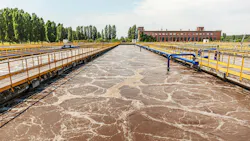
In complex wastewater treatment environments, mechanical reliability is rarely determined by the performance of a single component. Instead, it is the interaction between motors, gearboxes, couplings, bearings, shafts, controls, and mounting structures. This interaction ultimately determines how well a system performs over time. When these elements are treated as a unified system, performance becomes more predictable and reliability improves.
Many mechanical systems in water and wastewater facilities are designed, specified, and replaced as individual parts, without fully considering how each decision affects the system as a whole. This piecemeal approach can introduce inefficiencies, increase wear, and create risks that often remain hidden until the equipment is operating under real process conditions.
Wastewater facilities in particular place unique and often misunderstood demands on mechanical systems. Continuous-duty processes such as sludge handling, clarification, aeration, and biological treatment require equipment that can operate reliably in harsh environments with minimal intervention. These systems are frequently exposed to corrosive atmospheres, variable loading, intermittent duty cycles, and space constraints dictated by existing infrastructure. In these conditions, even small mismatches between components can have outsized impacts on performance and longevity.
Looking beyond individual parts
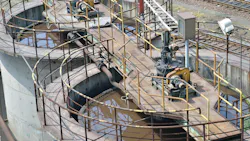
One of the most common pitfalls in mechanical system replacement is treating each component as an isolated decision. A motor may be selected based on nameplate horsepower, a gearbox based on ratio and torque rating, a coupling based on misalignment tolerance, and bearings based on load capacity. While each selection may be technically sound on its own, the complete system may behave very differently once it is assembled and placed into service. Dynamic loads, start-stop cycles, and real-world operating conditions often expose interactions that were never fully evaluated during component-level selection.
This challenge becomes particularly acute when facilities are faced with replacing equipment in continuously operating processes. Sludge tanks, for example, often rely on synchronized scraper mechanisms that must operate at precise speeds and torque levels to move solids effectively without overloading the drive system. These mechanisms are typically driven by multiple output shafts, chain drives, and gear stages, all of which must remain aligned in both performance and physical configuration. Any deviation from the original system behavior can disrupt the process, increase maintenance requirements, or reduce throughput.
In many cases, the challenge goes beyond choosing replacement equipment and centers on understanding how the system actually operates under load. That level of insight requires engineering work that extends well past catalog specifications. It involves analyzing how torque is transmitted across multiple shafts, how speed changes propagate through connected components, and how factors such as braking behavior, inertia, and load reversals affect overall stability. Just as important is matching the system design to the application’s duty profile, whether operation is continuous, intermittent, or variable, so performance margins reflect real operating conditions rather than nominal ratings.
How do you solve this challenge?
By finding a partner who brings deep engineering expertise along with a broad, flexible portfolio designed to enable customized solutions.
Engineering support is what turns that capability into real system performance. Rather than treating motors, gearboxes, and other components as standalone selections, system engineering focuses on translating operational requirements into coordinated mechanical behavior. That process starts with working closely with operators and owners to understand how the equipment is actually used, which failure modes create the greatest disruption, and what constraints exist around downtime, maintenance access, and available space. In wastewater applications, this perspective consistently reinforces that uptime and maintainability must be engineered alongside efficiency and capacity, not after the fact.
A practical example of this system-based approach can be seen in the replacement of sludge tank drive systems at a municipal wastewater facility. Regal Rexnord was approached by a facility that was operating multiple tanks equipped with multi-axis scraper mechanisms that continuously removed solids for downstream processing. The original equipment had been in service for decades, and many of the components had become difficult to source. Rather than attempting to replace individual parts piecemeal, Regal Rexnord’s Powertrain Solutions team proposed a complete system-level solution that could integrate seamlessly with the existing tank structure and process requirements.
From an engineering standpoint, the challenge was not simply recreating the original design but understanding its functional intent. The scrapers relied on multiple output shafts operating at different speeds, each synchronized through chain drives. Torque levels varied across the system, and startup behavior had to be carefully controlled to avoid shock loading. A drop-in replacement was required to avoid structural modifications, and the system had to meet modern expectations for efficiency, reliability, and serviceability.
Achieving this outcome required treating the motor, gearbox, couplings, shafts, bearings, and mounting structures as a single engineered system. Extensive analysis was conducted to match the original speed and torque characteristics while improving overall performance. In some cases, this meant adapting existing products rather than developing entirely new components. Equally important was the mechanical integration of these components. Custom mounting solutions were developed to ensure proper alignment and load transfer while maintaining compatibility with the existing tank structure. By designing the system as a whole, the engineering team was able to reduce installation complexity and minimize the risk of downstream issues caused by misalignment or incompatible interfaces.
This type of system-level engineering is difficult to achieve when components are sourced from multiple suppliers with limited coordination. Each supplier may optimize their component in isolation, but no single party is responsible for ensuring that the system performs as intended. When issues arise, troubleshooting can become fragmented, with responsibility spread across vendors and service providers. In contrast, working with a provider capable of integrating multiple components into a unified system creates a single point of accountability and enables more cohesive decision-making throughout the design and implementation process.
The benefits of an integrated approach
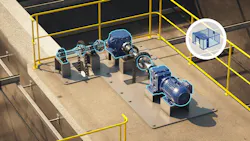
By replacing multiple standalone components with a coordinated system, the facility reduced maintenance intervention significantly. Previously, the sludge tank drives required quarterly maintenance to address wear and alignment issues, consuming roughly 240 labor hours annually. With the new system in place, those routine interventions were eliminated, resulting in approximately $24,000 per year in maintenance labor savings while freeing staff to focus on higher-priority tasks.
Energy efficiency gains can also emerge from better system coordination. Small improvements in motor and gearbox efficiency, when applied across multiple units operating continuously, can yield meaningful reductions in energy consumption. More importantly, these gains are achieved without altering the underlying treatment process, making them accessible even in facilities where process changes are impractical.
From an environmental perspective, reliable mechanical systems play a critical role in maintaining treatment performance and regulatory compliance. Failures in sludge handling or solids removal can lead to process upsets that affect effluent quality and increase the risk of noncompliance. By designing mechanical systems with robustness and durability in mind, facilities can reduce the likelihood of such events and support consistent treatment outcomes.
For water and wastewater operators, the takeaway is not that customization is inherently better than standardization, but that reliability depends on alignment. Achieving this perspective requires both technical expertise and a collaborative approach between facility operators and solution providers. It also requires a willingness to invest time upfront in understanding existing conditions, operational requirements, and long-term objectives.
About the Author
 Jesse Dupuis
Jesse Dupuis
Jesse Dupuis, the Director of Product Management for Powertrain Solutions at Regal Rexnord, has been with the company since June 2011. Throughout his tenure, he has held various roles, including Director of Product Management for Industrial Components, HVAC industry team member, and direct customer sales representative. With his extensive experience in the organization, Jesse brings a wealth of expertise to his current role. He focuses on showcasing how the breadth of Regal Rexnord’s portfolio, combined with services from experienced engineers who take on a product-agnostic approach, can enhance efficiency and optimization across customer applications. Jesse holds a bachelor’s degree in mechanical engineering from Western University.