Proactive foam control in wastewater treatment using high-frequency radar sensors
Key Highlights
- 80GHz radar sensors provide highly focused beams, reducing interference and improving foam detection accuracy in challenging environments.
- Advanced algorithms enable reliable identification of foam presence and thickness, supporting automated and precise antifoam dosing.
- Multiparameter outputs and digital communication protocols enhance process control and diagnostic capabilities for maintenance and verification.
- User-friendly commissioning tools streamline setup, reducing manual errors and deployment time.
- Onboard diagnostics ensure long-term instrument reliability, predictive maintenance, and quick component replacement.
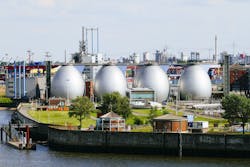
Foam formation poses a persistent challenge in wastewater treatment environments, particularly in anaerobic digester operation, but also in aeration tanks and clarifiers. Uncontrolled foam produces many adverse consequences, including reduced process capacity, safety hazards, environmental contamination through overflows, and critical equipment damage. Effective foam management requires accurately measuring liquid levels and detecting the presence and thickness of foam layers on top to optimize antifoam agent dosing.
Historically, foam management was a reactive effort, whereby reduced operational efficiency or overflow events prompted mass application of antifoam agents to mitigate undesirable conditions. Additionally, conventional non-contact ultrasonic level measurement technology utilizes mechanical sound waves, which can be absorbed by foam, degrading measurement accuracy.
However, recent advancements in 80GHz radar level measurement technology are revolutionizing both level measurement and foam mitigation processes by improving liquid level measurement and foam detection accuracy. These enhancements address long-standing challenges for more efficient, safe, and sustainable wastewater treatment operations.
Foam formation issues in wastewater treatment
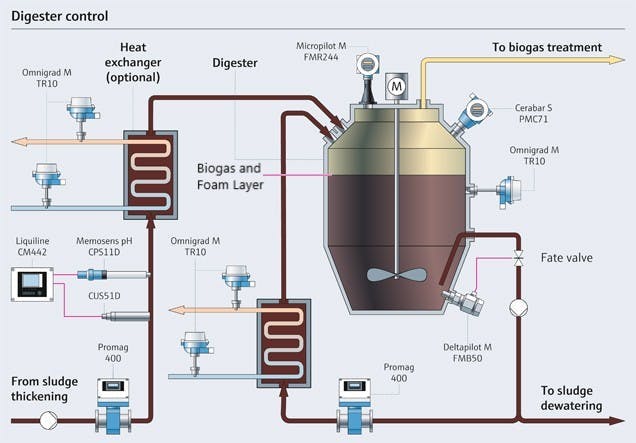
In municipal wastewater treatment, anaerobic digesters are used to break down organic matter in sewage sludge, which produces biogas (Figure 1). This process helps stabilize the sludge, reduce its volume, and potentially generate usable energy. However, the foam formation associated with this process can significantly reduce process efficiency.
Foam frequently forms in digestors due to ammonium nitrate in the centrate water returned to the digestor from downstream sludge dewatering processes. As biological activity within the digester breaks down organic matter, it produces methane, carbon dioxide, and other gases. When surfactants or surfactant-like compounds are present as well, these gases get trapped, forming stable foam (Figure 1).
Similarly, industrial wastewater streams, especially those from chemical and agrochemical production, frequently introduce contaminants such as detergents, oils, greases, and proteins. These substances alter the surface tension of the wastewater, promoting the formation and stabilization of foam blankets.
As foam builds up, it occupies increasing volume in a digester, reducing treatment capacity and throughput, and eventually bottlenecking the overall treatment process. Furthermore, severe foaming can create foam-over events, where foam escapes the digester and spills into the surrounding area. These spills create hazardous working conditions and introduce potential further environmental contamination if the untreated or partially treated sewage reaches waterways. Persistent foam can also cause equipment damage, such as clogging gas outlets, interfering with mixers, coating sensors, or corroding tank roofs and other metallic components.
Technical advancements overcome conventional level measurement shortcomings
For non-contact level measurement in wastewater treatment and other industrial environments, ultrasonic level sensing technology is a historically common choice. This technology relies on transmitting mechanical sound waves and receiving reflections from the process media surface. However, accuracy was degraded in the presence of surface foam due to its complex structure of gas bubbles and liquid films, which absorbed or scattered the sound waves. This caused weak or unreliable return signals, and sometimes even complete signal loss, leading to inaccurate level readings.
Guided wave radar measurement is an alternate contact technology, and while it is more robust than ultrasonic, there remain potential challenges with heavy coating and certain foam types. Other level measurement technologies, such as capacitance probes, can also be affected by build-up and changing dielectric properties due to foam.
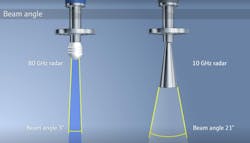
To address these and other challenges, next generation 80GHz free space radar level sensors, such as the Endress+Hauser Micropilot FMR6xB series, have been developed to provide accuracy improvements in the presence of foam over conventional technologies. This is possible due to the following characteristics:
- Narrow beam angle: High frequency 80GHz signals enable a very focused beam, as small as three degrees (Figure 2). This minimizes interference from tank internals, such as pipes, agitators, and ladders, while also increasing the measurement range and the ability to work with tall tank nozzles.
- More accurate foam detection: Advanced algorithms in modern instruments are more adept than their predecessors at evaluating reflected signals and identifying degradation as a result of foam absorption, thus reliably identifying the presence of foam. This enables plant personnel and automated mitigation systems to address the issue before it becomes a significant problem.
- Multiparameter output: Foam detection can be communicated to a host system as a secondary analog output (e.g., 4-20mA signal) representing foam index or as a digital limit signal (e.g., a switch output) that triggers when foam index exceeds a user-specified threshold. Foam index tracks the relative loss of level measurement signal strength, enabling optimal control of antifoam agent dispersion.
These modern instruments are also natively equipped with digital communication capabilities, supporting protocols like HART, Profibus, and Ethernet-APL, increasing contextualized information available for consumption by a host system. The data available includes critical process values, plus a wealth of diagnostic and signal quality data.
Furthermore, modern commissioning tools, such as Endress+Hauser's SmartBlue App, provide streamlined commissioning wizards, simplifying the configuration work into a short series of user-friendly setup screens. These tools guide users through foam detection settings and several other commissioning components, and also suggest optimal parameters based on application characteristics to reduce commissioning time and potential manual entry errors.
With increased operational context and a reliable understanding of foam presence, host systems can more precisely disperse antifoam agents just when needed, which avoids wasteful overdosing with expensive chemicals.
Verification and monitoring of the instruments
Beyond accurate measurement, process plant end users require long-term reliability and ease of maintenance for their instrumentation. These aspects are easier to address using instruments with onboard diagnostics, such as Endress+Hauser’s Heartbeat Technology. This type of capability leverages continuous self-monitoring to provide the following operational benefits:
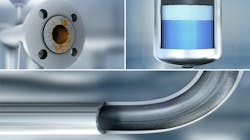
- Process verification with radar accuracy index (RAI): Modern instruments with integrated diagnostics provide on-demand instrument health and measurement integrity without requiring process interruption. For radar level instruments, RAI stores a reference “fingerprint” of the radar’s critical parameters. Each device is capable of comparing its status during operation to the fingerprint. Any deviations causing performance outside of factory specifications are identified and relayed as part of the Heartbeat Verification report (Figure 3).
- Predictive maintenance through monitoring: Continuous monitoring of internal device parameters and signal quality trends can identify potential issues before they produce measurement failure. This facilitates proactive maintenance scheduling to minimize unplanned downtime and revenue losses.
- Reduce required calibration frequency: With robust internal diagnostics and verification capabilities, onboard diagnostics often allow extending calibration intervals, saving time and resources while maintaining safety standards.
- HistoROM for seamless component replacement: Specific to Endress+Hauser instrumentation, HistoROM data storage ensures rapid and error-free electronic component replacement, with all device parameters and configuration data stored on an integrated memory chip for easy transfer to the replacement electronics. This gets instruments back online quickly without complex and time-consuming reprogramming requirements in the event of component failure.
Heartbeat Technology documents baseline and problematic performance, and it facilitates operator notification of issues, prompting them to respond quickly to assess and address instrument operation as needed.
The 80GHz level and foam sensing technology in practice
One prominent municipal wastewater treatment plant faced severe foam formation in its anaerobic digesters, primarily due to a high concentration of ammonium nitrate in the sludge dewatering centrate stream. This heavy foam frequently rose to critical levels, sometimes backing up upstream processes and damaging equipment. Conventional ultrasonic level sensors repeatedly failed to provide accurate level measurement or alert operations to the formation of foam.
To address these issues, plant personnel replaced the ultrasonic instruments with the radar level sensors, equipped with foam detection algorithms, to provide accurate and continuous level monitoring. This empowered the team to automate and optimize its antifoam agent dosing system, resulting in far fewer foam-overs and associated equipment damage, while conserving expensive chemicals. The plant found that the foam detection commissioning wizard in the SmartBlue App helped personnel perform a quick, straightforward, and error-free setup of the foam detection parameters.
In another case, at an industrial wastewater pretreatment facility used for processing specialty chemical and agrochemical effluents, the process experienced persistent high foam quantities in its oxidation reactors. This occurred primarily because of the specialty chemical mixtures in incoming wastewater streams. The voluminous foam was drastically reducing usable reactor volume and process efficiency. To mitigate these issues, antifoam agents were used in large and often excessive doses, leading to high operational expenditures.
The plant curtailed these expenses by installing the 80Ghz sensors in the reactors to detect foam as it began to appear. Recognizing foam early as it formed and relaying this signal to the plant control system enabled sprayers to release precise quantities of antifoam agent, providing optimal foam control while substantially reducing chemical expenditures.
To further enhance process insights and validate radar instrumentation foam detection, the plant also installed Cerabar PMC71B hydrostatic level sensors to independently record the process media level. Along with the embedded Heartbeat Technology in the instruments, this setup provided crucial instrument and process insights, allowing operators to detect anomalous behavior and continuously verify measurement integrity.
Innovate to improve
The advent of 80GHz radar level measurement technology, coupled with multiparameter transmitter outputs and advanced digital communication protocols, is helping users avoid the adverse effects of foam formation in wastewater treatment and other process applications. Cutting-edge instrumentation with sophisticated diagnostics and user-friendly setup wizards provides reliable liquid level measurement in most settings, even in the presence of foam, while also alerting plant personnel and host systems about foam formation. Equipped with this knowledge, operational teams are rapidly moving from reactive to proactive foam control, achieving improvements in production efficiency, safety, and sustainability, while reducing ongoing operational expenses and enhancing environmental protection.
About the Author
 Keith Riley
 Keith Riley
Endress+Hauser national product manager for level and pressure
Keith Riley is the national product manager for Level and Pressure at Endress+Hauser. He has been with the company since 2008, and he has over 20 years of sales, marketing, and instrumentation experience in the process industries
 Nick Hanson
Nick Hanson
Endress+Hauser water & wastewater industry marketing manager
Nick Hanson is the Water & Wastewater Industry Marketing Manager for Endress+Hauser USA. In this role, he is responsible for strategic market planning and industry outreach events. As part of the Endress+Hauser Global Strategic Industry Group, he acts as the voice of the U.S. market to guide solutions specific to the region. Nick has a Bachelor of Science degree in Mechanical Engineering from the University of Colorado Boulder, and he has worked in the process instrumentation and control industry since 2011.