The top wastewater articles of 2025
From regulatory shifts and major infrastructure investments to emerging treatment technologies and workforce challenges, 2025 was a pivotal year for the wastewater sector. Wastewater Digest readers turned to in-depth reporting and practical insights to navigate evolving compliance requirements, resilience planning, and system upgrades across the country. The following stories represent the most-read and most-discussed Wastewater Digest articles of 2025, highlighting the issues that mattered most to utility leaders, engineers, and operators.
1. Wastewater study highlights domestic PFAS as major contributor

A new Water Research Foundation (WRF) study is shedding light on how PFAS enters wastewater systems – and pointing to surprising sources.
2. What's happening at WEFTEC 25?

WEFTEC was back in Chicago for 2025 with a focus on emerging trends in the industry including AI. Editors at Wastewater Digest submitted a Q&A to the Water Environment Federation (WEF) to answer some of the key questions about this year's event. Alyson Moses, managing director, marketing & communications, at WEF, answered questions about the event, which took place Sept. 27 to Oct. 1 at McCormick Place Convention Center in Chicago.
3. Water sector enters AI era as adoption rates accelerate

The emergence of AI drew a lot of attention from attendees at WEFTEC 2025 in Chicago where experts stated that it is lowering barriers to digital adoption for water and wastewater utilities. During a Water-AI Nexus Center of Excellence presentation WEF President Ralph Exton, AWS Water Strategy and Technology Principal Beau Schitz, The Water Center at the University of Pennsylvania Director of Strategic Development and Communications Brenton McCloskey, Publisher and Owner of GWI Chritopher Gasson and WEF Managing Director for Marketing and Communications Alyson Moses offered new ways to boost efficiency, manage aging infrastructure and adapt to climate pressures.
4. Global water utilities face funding crisis amid aging infrastructure

Funding issues plaguing utilities aren’t just localized to the United States. The world’s water and wastewater utilities are grappling with a massive and urgent challenge: an impending wave of expenditure required to address a growing infrastructure deficit. This key concern was highlighted by Joel Kolker in a recent session he presented at WEFTEC 2025 in Chicago.
5. How advanced digital technologies are transforming wastewater treatment and biosolids
 dreamstime_xxl_332022377
The wastewater industry faces the unique challenge of managing variable influent flows and loads while ensuring a consistent effluent quality, or at least one that meets all the effluent limits. In addition to this challenge, one can also consider: aging infrastructure, climate change, population migration, deferred maintenance and other environmental and human stressors that make managing wastewater and biosolids a bigger challenge than ever.
6. PFAS in Sewage Sludge: What wastewater experts are saying
 Excavator loads tractor with fertilizer for farming. 57% of wastewater biosolids are land applied as fertilizer in the United States.
The U.S. Environmental Protection Agency (EPA) released its Draft Sewage Sludge Risk Assessment on January 14, 2025, for perfluorooctanoic acid (PFOA) and perfluorooctane sulfonic acid (PFOS).
7. Key points from Jessica Kramer's opening statement and Q&A at Senate committee hearing

The U.S. Senate Committee on Environment and Public Works (EPW) held a committee hearing on March 26, 2025, to consider the nomination of Jessica Kramer to be Assistant Administrator of the U.S. Environmental Protection Agency (EPA) Office of Water.
8. Editor-selected sessions: Innovative approaches to microplastics, PFAS and flood mitigation at WEFTEC 2025

Wastewater Digest editors hand-picked sessions for WEFTEC 2025 in Chicago that follow current industry trends from microplastics and PFAS contamination to flood mitigation. Below is a list of topical sessions on some of todays hot topics.
9. The rise of thermal treatment technologies for sludge & biosolids
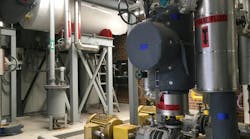
The biosolids treatment landscape in North America is undergoing a significant transformation. With increasing regulatory pressures, rising costs, and growing environmental concerns, utilities are exploring proven and innovative thermal treatment methods to address biosolids management risks.
10. A closer look at advanced wastewater filter technologies
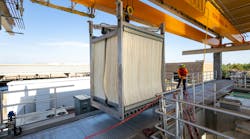
The field of wastewater treatment has seen significant technological advancements over the years, particularly in filtration processes. Filtration plays a crucial role in removing contaminants from the wastewater stream before it is released back into the environment or reused for industrial and municipal applications. Over the past several decades, conventional tertiary filtration techniques like disc, fuzzy, sand and media filters have evolved to more advanced systems, improving efficiency, sustainability and compliance with environmental regulations.
About the Author
 Alex Cossin
Alex Cossin
Associate Editor
Alex Cossin is lead reporter, staff writer and content strategist for Waterworld Magazine, Wastewater Digest, Stormwater Solutions and Water Technology. Cossin graduated from Kent State University in 2018 with a Bachelor of Science in Journalism. Cossin can be reached at [email protected].