Digital tools are changing how water utilities handle flooding
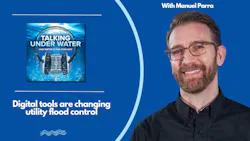



In this episode of Talking Underwater, Stormwater Solutions Head of Content Sarah Kominek speaks with Manuel Parra of Xylem Vue about how digital tools are changing the way municipalities prepare for and respond to flooding. The conversation explores how communities can use existing infrastructure more effectively, why high-quality data matters as much as data collection, and how predictive analytics, modeling, and AI can support faster, smarter decisions during wet weather events. Parra also shares real-world examples from Houston and Buffalo to show how practical, scalable flood-control technology can help reduce risk, improve operations, and protect lives.
Key Moments
- 00:00 - Episode introduction and overview of why flood prediction is becoming more urgent
- 01:54 - How digital flood-control applications help municipalities respond to severe weather events
- 03:11 - Tools emergency managers use today, from sensors and rain gauges to models and AI
- 04:24 - Why data quality, not just data quantity, is critical for effective flood response
- 06:25 - Houston example: underpass flood detection and public alerts using existing infrastructure
- 08:05 - Buffalo example: preemptive system management that helped reduce combined sewer overflows
- 10:12 - What integrating digital technology with existing stormwater infrastructure looks like in practice
- 11:35 - The role of predictive analytics and AI in supporting operator decisions
- 13:16 - How climate variability changes the baseline and why models must keep evolving
- 14:32 - Regulatory and liability considerations tied to better infrastructure management
- 15:34 - How smaller or under-resourced communities can adopt lower-cost, right-sized solutions
- 17:34 - Typical lead times for flood prediction and why every minute counts
- 18:35 - Final takeaway: flood technology does not have to be overly complex to make a major impact
Resources
- Take our asset management poll: wwdmag.com/assetmanagement2026
- Read the May/June edition of WaterWorld Magazine: www.waterworld.com/magazine
- Register to attend StormCon: www.stormcon.com
About the Podcast
Talking Under Water is the premier podcast for the water industry, including municipal water and wastewater, residential water treatment, storm water management and erosion control. It is produced in coordination between Wastewater Digest (WWD), WaterWorld and Stormwater Solutions (SWS). The podcast covers topics under the One Water movement including the municipal and industrial water and wastewater, residential, stormwater and erosion control markets. Talking Under Water highlights news, trends, new technologies, industry discussions and interviews with experts across the municipal water industry. New episodes of the podcast are released every other week. Logo Images: Anatoly Tiplyashin / Romolo Tavani / stock.adobe.com.
Contact the Talking Under Water podcast editors by emailing [email protected] engaging with them on X @TUWpodcast. Join the conversation by commenting or using the hashtag #talkingunderwaterpod on social media.
About the Author
 Sarah Kominek
Sarah Kominek
Head of Content, Stormwater Solutions
Sarah Kominek is the head of content for Stormwater Solutions at Endeavor Business Media, a division of EndeavorB2B. Kominek graduated from Wayne State University in 2019 with a Bachelor of Arts in Journalism and a minor in Communication. She worked as a reporter for Plastics News, a Crain Communications publication, for six years covering public policy and medical plastics.