The future of wastewater asset management starts before inspection
Key Highlights
- Utilities are shifting from siloed inspections to an infrastructure intelligence-first workflow that enhances early risk detection.
- Satellite leak detection and AI analytics provide actionable insights, allowing targeted inspections and proactive interventions.
- Prioritizing high-risk assets improves inspection efficiency, reduces emergency repairs, and optimizes resource allocation.
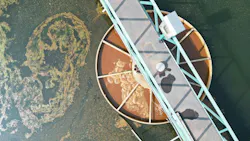
Wastewater utilities work tirelessly to operate safe and efficient systems. They’ve had to get good at putting out fires. Unfortunately, by the time the proverbial smoke is visible, usually the fire has been burning for a while.
When we think about the future of wastewater management, aging infrastructure, limited budgets, and leaner crews are common issues. The complex nature of these issues means inspecting more assets may not be the reality or even possible. Many utilities are shifting to risk-based asset management strategies that prioritize resources where they can have the greatest impact. Knowing which assets need attention first is now, and will remain, the key to successful management programs.
This article explores why investigation prioritization is now the best practice and a critical early step in wastewater asset management.
The operational reality of wastewater programs is that an overflow, a collapse, an exfiltration, or an urgent repair rarely occurs suddenly. The conditions setting this issue into motion were usually developing over months or years, unseen and unnoticed. Utilities manage systems which are vast, largely underground, and not visible. Pair this with the fact that utilities are working with shrinking teams and limited funds. As a result, inspections are often triggered when emergency response is needed.
The Environmental Protection Agency (EPA) estimates that 23,000 to 75,000 sewer overflows occur annually in the United States.1 These overflows are caused by blockages, line breaks, sewer defects, power failures, and improper design. It is noted that these values exclude sewage backups into buildings (which would presumably increase those values significantly, if included).
Identifying the problem: The scale is not balanced
There is persistently out-of-balance prioritization when it comes to utility asset management. With too much infrastructure and too few resources, a perplexing dilemma is created for nearly every utility. The long list of economic priorities must be balanced carefully.
We usually see a prioritization list such as this:
- Structural deterioration
- Regulatory requirements
- Severe wet weather events
- Capital constraints
- Infiltration and outflow
- Loss of experiences personnel and institutional knowledge
The scale tips one direction because the wastewater-related needs are enormous. In the EPA’s 2022 Clean Watershed Needs Survey, $630.1 billion in clean water infrastructure investment needs over the next 20 years were identified.2 This includes $151.1 billion needed specifically for wastewater conveyance system repair and new conveyance systems. It is staggering.
Utilities are working their processes, but the need generally exceeds the financial resources available for both capital improvements and repairs. Prioritizing actions is the name of the game.
Another area of wastewater asset management concern relates to workforce. A Bureau of Labor and Statistics (BLS) study projects 10,700 job openings each year through 2034 for wastewater and water treatment plant and system operators.3 As such, since money, crews, and time is all constrained, knowing where (and where not) to send crews is very valuable.
In the state of New Mexico, government and utility leaders are collaborating to make water leak detection a priority. Grants for under-funded utilities to leverage ASTERRA technology are enabling communities to secure satellite-based data and proactive intelligence to save water, energy, and funds for their citizens. This type of collaboration would benefit wastewater programs also.
Challenging the usual asset management workflow
The conventional asset management workflow looks like this:
Asset inventory > Inspection > Condition Assessment > Risk Ranking > Rehabilitation and Repair
Inspections and assessments are attempted by the various commonly used methods, such as CCTV, acoustic inspection, robotics, manhole inspection, or other field techniques. These do yield some information to investigate, but each method operates independently of each other, in siloes. Plus, they each involve deploying scarce and expensive field crews.
No utility can thoroughly investigate everything in the system at once, but satellite leak detection is one way to survey vast systems and identify likely priorities.
Many utilities are embracing a workflow that yields greater intelligence, earlier in the process. A new workflow in which infrastructure intelligence provides the basis for repair and rehabilitation action looks like this:
Infrastructure intelligence > Investigation > Prioritization > Targeted inspection > Condition Assessment > Intervention
With this model, the infrastructure intelligence comes first, leading to more efficient investigation and prioritization.
Moving from siloed asset data to infrastructure intelligence
The new infrastructure intelligence-first workflow seamlessly integrates with the multiple layers of information utilities can access when performing investigations or their asset management systems. These layers of information can reveal patterns or irregularities and inconsistencies associated with infrastructure risk. Some of these intelligence layers include:
- Asset intelligence, including pipe age, material, installation history, inspection records
- Geospatial intelligence, including GIS asset locations, soil moisture levels and condition
- AI analytics, with tools capable of examining multiple data sets for patterns and anomalies, across thousands of data sets
- Operational intelligence, including flow, pressure, maintenance records, work orders
- Environmental and Earth observation, including surface conditions and changes
Earth observation, GIS, historical asset information, and artificial intelligence combine to create an investigation process and prioritization layer which is not present in conventional workflows. This is where asset management begins because it creates actionable intelligence. If the typical asset management process begins with a big picture evaluation of the underground system and identifies the places most worthy of investigation before a sewage emergency, there would be fewer fires to put out.
Lean teams thrive with better intelligence
Infrastructure intelligence acts to multiply the impact and effectiveness of a labor force, rather than replacing it. Analytics enable stakeholders and teams to decide where to place the focus. Even with sound technology and AI, operators provide the necessary context, knowledge, and judgement to resolve the complex problems in wastewater systems. Many utilities focus the expertise of the team on the infrastructure most likely to impair risk. For a clear baseline, satellite leak detection provides actionable intelligence on vast regions of water and wastewater systems; the return on investment is astounding.
Better intelligence becomes infinitely more effective when combined with a collaborative approach to wastewater system asset management. Innovation becomes meaningful when disparate technologies work together. This provides proactive insight, and shares locations of “hot spots,” helping smaller crews address issues before they become emergencies.
Track the metrics that drive positive outcomes
Utilities commonly measure inspection programs through outputs such as miles inspected, manholes inspected, and assets assessed. However, measuring meaningful outcomes may demonstrate greater success and positively impact the bottom line. Some of these outcomes include:
- High risk assets identified per inspection dollar spent
- Emergency repairs avoided
- Actionable findings per mile inspected
- Reduction in unnecessary field deployment
- Time from risk identification to intervention
- Capital directed to highest consequence assets
The most successful inspection program may not inspect the most pipe. Rather, it may use intelligence to prioritize inspections and produce the most actionable intelligence from every dollar spent.
Shifting from reactive to proactive measures
Utilities will always need inspections within their asset management programs. They will also always need experienced operators, CCTV, engineering intelligence, and boots on the ground. The big shift is where the process begins. Asset management can start before any truck rolls out, before a camera enters a pipe, and before an operator notices pipe deterioration. It starts by asking where risk might be developing.
This is how we snuff out the embers of wastewater fires before they start.
Data sources
- S. Environmental Protection Agency, “Sanitary Sewer Overflows (SSOs),” last updated April 13, 2026. https://www.epa.gov/npdes/sanitary-sewer-overflows-ssos
- S. Environmental Protection Agency. “Clean Watersheds Needs Survey.” Last updated August 17, 2026. https://www.epa.gov/cwns
- S. Bureau of Labor Statistics. “Water and Wastewater Treatment Plant and System Operators.” Occupational Outlook Handbook. U.S. Department of Labor. Last modified August 27, 2026. https://www.bls.gov/ooh/production/water-and-wastewater-treatment-plant-and-system-operators.html
About the Author
 Lyndsay Toll
Lyndsay Toll
Lyndsay Toll is product marketing senior manager for Asterra. Toll brings over 10 years of experience guiding products from idea to launch and specializes in turning customer insight into compelling, user-centered solutions. Through meeting with boots-on-the-ground teams and utility decision makers alike, she has delivered market-ready innovations, combining strategic vision with hands-on execution in product management, market research, and business development.