The drone threat to water infrastructure
Key Highlights
- Larger, highly accurate drones can cause severe damage to water infrastructure by targeting control rooms, pumps, and backup power systems, leading to long repair times.
- Water facilities are especially vulnerable due to their often centralized design and reliance on single or few critical infrastructure points, increasing risk of widespread outages.
- Potential attack methods include deploying drones from ships in international waters or emplacing containers with weaponized drones near targets, complicating detection efforts.
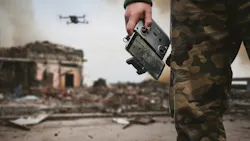
Weather has threatened water infrastructure since the dawn of human civilization. Now, warheads are also on the threat menu. The proliferation and use of long-range, highly affordable one-way attack drones is at the forefront of this new risk picture. Iran struck desalination facilities in both Bahrain and Kuwait during the first weeks of the ongoing conflict.
As more actors around the world acquire—and use—such systems, it is imperative for water utilities to engage the uncomfortable questions of “could it happen here, how could it happen, and how can we harden ourselves to protect the millions of people who depend on us for water?”
Drinking water and wastewater treatment plants typically house critical processes and equipment in light industrial buildings designed to resist normal weather, not high explosives and supersonic shrapnel. They are not made to deal with strike munitions of any size, and certainly not larger drones like the Shahed types Russia and Iran use or the LUCAS system now used by the US military. These types of drones carry warheads that are 40 lbs or larger, can fly 500 miles or more, and are highly accurate.
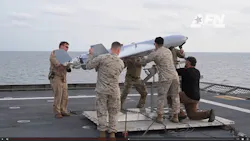
Larger drones pose an especially significant risk to water infrastructure. The drone warheads Russia has used in Ukraine contain pre-fragmented metal cubes as well as multiple explosively formed penetrators, whereby the detonation of high explosive turns copper disks into high-velocity projectiles capable of penetrating even robust metal structures.
Shrapnel, blast, and a kinetic blow akin to a 1500kg car crashing into the facility wall at 45 miles per hour are all released in a roughly one second timeframe. Against unhardened control rooms, switchgear, pumps, chemical systems, or unprotected backup generators, this would inflict severe damage.
When water plants suffer kinetic damage, it can take a long time to get them back online. Natural disasters provide some examples. On 16 December 2015, a supercell thunderstorm near Sydney, Australia spawned an EF-2 tornado that passed over the Kurnell Peninsula with winds estimated to have reached at least 132 miles per hour.
The twister did not cause any serious human injuries but left major property damage—foremost among them the Sydney Desalination Plant, which lost several building roofs and a control room. It took nearly 3 years to make the plant capable of water production again. Tornado damage events to a drinking water facility in Iowa and wastewater treatment plants in Arkansas and Texas tell similar stories of multiyear repair times.
A large one-way attack drone would not replicate a tornado’s precise damage mode and pattern, but it could produce comparable outage consequences if it struck control rooms, switchgear, pumps, chemical systems, intake structures, or backup power assets
Who is most at risk?
Many of the 100 largest water systems in the United States sit within 250 miles of the coast. This means an adversary–state or non-state actor–could potentially launch heavy drones from 250 miles (or more) offshore. Compounding things, water systems are often highly susceptible to single or near-single points of failure. As an example, Houston obtains over 80% of its drinking water supply from just three surface water plants, with the majority of that coming from a single facility.
Surface-water dependent cities are especially vulnerable because treatment operations are often consolidated to a single or handful of very large facilities, as opposed to groundwater operations where production is dispersed across dozens or hundreds of individual wells and water generally requires less treatment to be rendered potable.
How could the threat arrive?
Containers bearing heavy drones could potentially be moved into the US and emplaced for closer launch to targets. But this risks detection by law enforcement. Containerized drones launched from ships offshore would be an even more challenging threat.
Ships carrying drones could steam in international waters while blending in with commercial traffic. Furthermore, even small ships could carry a lot of drones. My modeling suggests a single 1,500 TEU feeder vessel—common in Gulf of Mexico and Caribbean trade—could easily deploy dozens of heavy strike drones from its top layer of containers alone, even if only 10% of those visible boxes were weaponized.
A wave of 30-to-50 inbound heavy strike drones would be a problem that few if any large water systems would be ready to deal with.
How water facilities can harden their defenses
Drones would not necessarily need to strike the water machinery itself to pose a grave threat. Water treatment and wastewater facilities are analogous to datacenters and other electricity-intensive industrial systems in that an adversary does not need to strike the facility directly to achieve a mission kill. They can instead hit the substation supplying it with power and the process goes down.
There are resilience responses to such actions. Option 1 is to harden key nodes. Reinforced concrete blast walls offer protection against fragmentation and explosively formed penetrators. Facilities can also build heavy gauge metal screens to help repel drones from key areas.
This adaptation emerged during the Ukraine War and was initially used on vehicles but has since appeared on large oil tanks in the UAE as a protective adaptation against drone strikes by Iran and Iran-backed regional militias. Russia has also installed such anti-drone protections on oil tanks. This suggests it could also be a solution for physically large water infrastructure assets. It is not a perfect security measure but the ability to physically destroy a drone or else make its warhead detonate further away from key systems has significant protective benefits.
Physical barriers have three additional advantages: they harden water infrastructure against the impacts of windstorms such as tornadoes and derechos, they can be built by local contractors using easily obtainable materials, and they do not require specially trained personnel to operate. This makes them faster and more affordable to build compared with active electronic and physical defenses that are expensive, require trained operators, and potentially require military participation.
Passive defenses’ also do not interfere with other activities in the area the way electronic defenses can, nor do they create active risk to other aircraft in the area. This problem was dramatically illustrated earlier this year by airspace shutdowns in the El Paso, Texas area caused by Customs and Border Patrol using a laser system to engage airborne objects.
Option 2 entails maintaining a backup generator fleet Many water systems have installed or are installing fixed natural gas backup generators. These have the advantage of not needing diesel fuel deliveries and being able to access continual fuel from highly resilient pipeline systems. But their importance makes them a prime target and they must be hardened.
Option 3 entails expanding the ready reserve of long-lead time spare parts. Pumps, valves, and control equipment would be high on this list. Water utilities should consider maintaining both the physical parts and agreements with contractors to maintain local standby repair teams that can deploy within 6 hours of a disruption to commence repairs.

Resilience serves double duty
The highest probability threats to water systems in most of the United States come from weather events–foremost among them, flooding. Weather-related electricity supply problems are also a relatively high probability challenge in certain parts of the country. The damage to water systems across Texas during Winter Storm Uri is a case in point.
The democratization of long-range precision strike adds a new element to the risk picture. Drones that cost less than a pickup truck can fly 500 miles and accurately strike specific parts of a facility with substantial warheads. This gives adversaries a new set of options to cause damage and to force re-allocation of air defense resources.
In a major-power crisis, covert or deniable drone attacks against civilian-enabling infrastructure would offer an adversary a low-cost way to impose delay, confusion, and domestic disruption. For a contemporary example, consider how Iran-backed militias in Iraq have actively attacked energy infrastructure in Gulf countries, including even the Barakah Nuclear Power Plant in the UAE. Such actions could be used to hinder US mobilization and responses. A protracted water supply disruption to a major port city like Houston, San Diego, Los Angeles, or Norfolk could cause major impediments to US military logistical movements during a crisis.
The good news is that many of the steps needed to harden water facilities against drone threats, for instance more robust enclosures, hardened backup power systems, and a larger ready stockpile of spare parts also bolster resilience to weather-related challenges that have become more common in the past two decades.
Multiple larger water systems and cities have the financial capacity to begin implementing measures that enhance both drone and windstorm resilience. That said, if they use their own financial resources they will at a minimum have to make the political case to ratepayers in their service areas and potentially, to state public utility commissions as well. Given that drones are (thus far) a "not happened yet" threat to US water systems, state and federal assistance to large water utilities may be required to kick-start the process of installing resilience enhancements. The drone threat will only become more important in coming years.
The opinions and assessments expressed in this analysis are the author’s personal views and do not reflect the positions of Rice University’s Baker Institute or any other entity he is affiliated with.