Q&A: Pioneering carbon credits in wastewater management
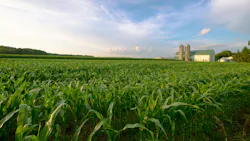
Madison Metropolitan Sewerage District (MMSD) has become the first U.S. utility to generate verified carbon credits tied to watershed-based compliance through its Yahara WINS initiative.
The program produced 24,143 credits in January, representing avoided greenhouse gas emissions achieved by investing in watershed conservation rather than building additional treatment infrastructure at the Nine Springs Wastewater Treatment Plant.
Launched in 2017, Yahara WINS enables the district to meet phosphorus limits under the Clean Water Act through adaptive management practices across the watershed. Over its 20-year lifespan, the initiative is projected to avoid more than 73,000 metric tons of carbon dioxide equivalent emissions while improving regional water quality.
Wastewater Digest editors supplied a list of questions about the program to MMSD. Martye Griffin, ecosystem services manager at MMSD, and Alex Johnson, chief strategy officer for Virridy, provided more information about the program in a Q&A below.
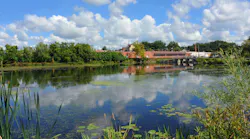
How Madison Metropolitan Sewerage District genereated carbon credits for watershed-based compliance
What motivated Madison Metropolitan Sewerage District to pursue watershed-based compliance through Yahara WINS instead of building a tertiary phosphorus removal facility at Nine Springs?
Martye Griffin, MMSD: A District study found that tertiary treatment would cost nearly $200 million to achieve the required phosphorus reductions. At the same time, we knew phosphorus in the watershed was coming from multiple sources, which called for a more cost-effective, comprehensive solution. By pooling resources with partners, we pursued a watershed-scale approach that could reduce nutrient loads more efficiently and deliver a stronger return on investment for compliance. Yahara WINS is now emerging as a leading model for watershed-based adaptive management, and its carbon credit component could serve as a framework for other utilities facing similar regulatory and fiscal pressures.
At the time the program was launched in 2017, how confident were you that adaptive management would meet regulatory phosphorus limits compared with traditional infrastructure upgrades?
MG: We were highly confident because the program was built on a clear regulatory and technical foundation. State regulators had already completed a total maximum daily load (TMDL) for the watershed, which established the nutrient budget and reduction targets needed to meet water quality standards. Those clearly defined goals provided a strong basis for an adaptive management plan, developed collaboratively alongside other phosphorus sources in the watershed. The Yahara WINS initiative established a governance and funding model to support implementation using funds for proven best management practices and well-established tools used to calculate reductions, such as SnapPlus.
How has Yahara WINS changed the District’s long-term strategy for meeting nutrient regulations and managing watershed health?
MG: Yahara WINS has reinforced a broader District strategy focused on partnership, prevention and adaptive problem-solving. The emphasis is on reducing pollution at the source rather than relying only on treatment plant expansion to address water quality challenges. That strategy also informs how the District approaches other permit-related issues, including chloride, mercury and PFAS. It also applies to broader operational and infrastructure challenges, such as fats, oils, and grease and non-flushable wipes, which affect treatment plant performance.
How did the idea of generating carbon credits from avoided wastewater infrastructure emissions first emerge?
Alex Johnson, Virridy: The concept grew out of a 2021 research collaboration launched through Colorado legislation to study emerging water management technologies, led by the Mortenson Center in Global Engineering & Resilience at the University of Colorado Boulder. Virridy’s work on the methodology was later supported by foundation and National Science Foundation funding, published in a peer-reviewed 2024 study in Nature Communications Earth & Environment, and formally published on the Regen Registry in December 2024. After becoming aware of the District’s work through Yahara WINS, Virridy offered to study whether the watershed-based compliance strategy could qualify under that methodology.
How does the cost of implementing watershed conservation through Yahara WINS compare with the cost of building and operating a tertiary treatment system?
MG: The watershed adaptive management approach used through Yahara WINS is structured as a 20-year option. District life-cycle cost estimates completed in 2012 showed that tertiary treatment would cost nearly $200 million over that period. By comparison, a cost model developed to estimate the implementation of conservation practices through an initiative like Yahara WINS over the same 20-year period put that cost significantly lower at about $35 million. That cost differential was central to the District’s decision.
What types of conservation practices have proven most effective in reducing phosphorus across the watershed?
MG: The most effective practices are the ones that keep nutrients on the land and in the soil, where they remain available to plants rather than being transported to surface waters. The practices most widely used include cover crops, low-disturbance manure injection, and reduced-tillage systems such as low-till, no-till, and strip-till. In many cases, the greatest reductions occur when farms use two or more of those practices together, such as cover crops combined with reduced tillage systems.
What role do farmers and landowners play in the success of the Yahara WINS program?
MG: Yahara WINS only works when farmers and other landowners adopt practices that reduce runoff and keep nutrients in place. For farmers, that may mean cover crops, reduced tillage or other conservation practices that fit their operation. For other landowners, it may look like installing rain gardens or improving stormwater management on their property. In every case, it’s about creating opportunities for water to stay on the landscape rather than run off into waterways, which improves water quality and supports WINS. Everyone has a role in phosphorus reduction and protecting our local waterways.
What would other wastewater utilities need in order to replicate this carbon credit model?
MG: They would need three things: regulatory support for a watershed-based compliance approach, a real alternative to treatment plant expansion, and strong technical documentation showing the emissions that would be avoided by choosing that alternative.
AJ: That technical documentation starts with a formal life-cycle analysis comparing a conventional treatment upgrade with a watershed-based or green infrastructure approach. The difference in carbon emissions between the two pathways serves as the basis for quantifying and documenting carbon credits under the model’s methodology.
How do you see Yahara WINS evolving between now and the end of the program in 2036?
MG: Adaptive management, by definition, has to evolve. For Yahara WINS, our operating environment today differs from what it was when the program launched, and climate change, land use change and economic conditions will continue to shape how the program meets its annual goals through 2036.
In fact, the program is already adapting through partnering with the U.S. Geological Survey to better understand when nutrients are most likely to move through the watershed, so implementation can refocus on practices that are most effective at key times of year. And as more farmers participate and more acres are enrolled, the program is shifting to a more targeted watershed approach to achieve reductions where they will have the greatest impact.
Could watershed-based carbon credits eventually become part of a broader climate strategy for wastewater utilities?
MG: Yes. Avoiding emissions is a great way to start a climate strategy to reduce greenhouse gas emissions from wastewater utilities. Many utilities are already considering more affordable alternatives to meet water quality standards, as the cost of compliance increases as permit limits get stricter. A watershed-based approach, like Yahara WINS, could help meet compliance and create an opportunity to monetize through the voluntary carbon market.
AJ: If all wastewater utilities rely solely on mechanical treatment to meet increasingly stringent regulatory obligations, there will be significant growth in energy use and climate emissions in the U.S. water sector. This new methodology and the District-Virridy collaboration to generate carbon credits from Yahara WINS are intended to support broad adoption by other wastewater utilities, which will face similar regulatory pressures in the future.
About the Author
 Alex Cossin
Alex Cossin
Associate Editor
Alex Cossin is lead reporter, staff writer and content strategist for Waterworld Magazine, Wastewater Digest, Stormwater Solutions and Water Technology. Cossin graduated from Kent State University in 2018 with a Bachelor of Science in Journalism. Cossin can be reached at [email protected].