Prince William Water investing $184 million in infrastructure upgrades at water reclamation facility
Key Highlights
- The project represents a $184 million investment to upgrade aging infrastructure, ensuring reliable water treatment for the next 50-60 years.
- Key improvements include enhanced odor control, a new headworks building, upgraded chemical systems, and advanced UV treatment equipment.
- Prince William Water adopted a design-build approach, fostering collaboration and accelerating project delivery while controlling costs.
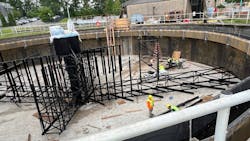
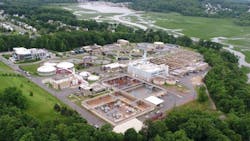
In the heart of Woodbridge, Virginia, Prince William Water is undertaking a transformational $184 million infrastructure initiative at its H.L. Mooney Advanced Water Reclamation Facility (Mooney AWRF), the organization's largest capital project since its inception in 1983. This award-winning facility treats up to 24 million gallons of wastewater daily, meeting or exceeding federal and state standards. Reclaimed wastewater from the plant is released into Neabsco Creek, a tributary of the Potomac River and part of the Chesapeake Bay Watershed.
The multi-year infrastructure project, which began in late 2023 and is slated for completion in the spring of 2028, will elevate nearly every aspect of the facility’s operations. From upgraded odor control systems and state-of-the-art electrical infrastructure to the integration of advanced treatment technologies, the project marks a bold step to support operational resilience and environmental stewardship.
“Investing millions in water and wastewater utility infrastructure means ensuring the availability of clean, safe and reliable drinking water and water reclamation services for the future,” said Calvin D. Farr, Jr., P.E., General Manager and CEO, Prince William Water. “Every improvement we make is a promise to our customers and our community that clean water, environmental stewardship and reliability remain our top priorities.”
Industry significance
Aging infrastructure is a significant issue for water and wastewater utilities nationwide and a crucial concern for their customers. According to the US Water Alliance's 2025 Value of Water Index, voters in the United States believe continued investment in drinking water and wastewater services are critical to support life as we know it. Ninety-six percent of voters in the 2025 survey believe these investments are critical for good public health, and 95% believe they are critical for the overall well-being of their communities.
Proactively renewing existing infrastructure and building new facilities is key to maintaining and enhancing water and wastewater service. Prince William Water has a $1.4 billion five-year Capital Improvement Program, with numerous projects in design and under construction. The Mooney AWRF project is the utility’s most ambitious to date.
With the water reclamation facility nearing its 50th anniversary and much of the equipment nearing the end of its anticipated service life, Prince William Water assessed the facility and took a forward-thinking approach.
“We’re now starting to see signs of fatigue and wear, especially in some of the metal components. What we absolutely want to avoid is running equipment until it fails,” said Glenn Pearson, Director of Environmental Services & Water Reclamation Division at Prince William Water. “Recognizing that a significant portion of our infrastructure, particularly the tankage, is approaching the end of its intended lifespan is precisely what’s driving this project and why we’re investing now.”
Community impact
The upgraded facility will better serve Prince William Water’s growing community and continue to provide reclaimed water for the next 50 to 60 years, without the need for additional treatment capacity. Approximately 75% of the project’s cost will be used to replace aging components originally installed in the 1980s.
Odor control will be significantly enhanced through measures such as covering the primary clarifiers, treating emissions from the solids processing area and constructing a centralized odor control system designed to reduce odor in the surrounding community.
“Odor control was the initial driver for this project, but many of the plant’s components are now 40 years old,” said Shannon Spence, Director of Project Management. “While some maintenance had been deferred, we’re now investing in resiliency and additional storage capacity to ensure continued operations.”
The project also includes upgrades to the plant’s chemical systems and the installation of additional ultraviolet (UV) equipment to enhance the reliability of the plant’s treatment capabilities.
New headworks building
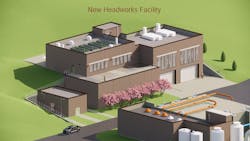
The project includes key operational and resiliency upgrades, such as the construction of a new headworks building designed to enhance influent screening and improve hydraulics at the start of the treatment process.
Upgrading the headworks is a vital investment in the long-term efficiency and reliability of the Mooney AWRF facility. As the first line of defense in the treatment system, the new building will significantly improve screening and grit removal, safeguard downstream equipment from damage, and reduce ongoing maintenance costs.
“The headworks of a wastewater treatment plant plays a crucial role in the early stages of the process. It helps clean up the water right when it enters the system, getting rid of big stuff and harmful things early on,” said Pearson. “This protects people and the environment, saves resources, and makes the rest of the cleaning process work better.”
By incorporating advanced automation and durable materials, upgraded headworks can handle future capacity demands and environmental regulations, making it a smart foundation for this infrastructure improvement project.
Utilizing design-build model
Capital improvement projects have long relied on the traditional design-bid-build model, where design and construction are separately procured and managed. In this approach, key contributors, including contractors, subcontractors and equipment suppliers, have minimal involvement in early planning or design stages.
Prince William Water chose the design-build model for its Mooney AWRF project, bringing the owner, designer and builder together early in the process to leverage their collective expertise. This integrated approach has fostered greater collaboration and efficiency. By aligning design and construction phases, the project has advanced more rapidly, while minimizing the risk of cost escalation.
“Design-build allows us to improve the design in real time,” said Spence. “We’re designing and building simultaneously. While that can introduce some stress since not everything is resolved before ground is broken, the benefit is a more adaptive, responsive process. It’s still a relatively new approach in the water and wastewater industry, but we’re already seeing clear value for our ratepayers.”
Importantly, design-build prioritizes value over low-cost bidding and team selection, with an emphasis on collaboration between owner and builder.
“From the start, we have understood Prince William Water’s priorities, which allowed us to shape the project around a shared understanding of what really matters. That mutual willingness to recognize each party’s priorities makes all the difference,” noted Al McCullough, Vice President of Ulliman Schutte, the project’s builder-of-choice.
Virtual reality brings plans to life

As part of an innovative approach to infrastructure planning, Mooney AWRF operations
and maintenance staff have experienced the upgraded facility using virtual reality (VR) in a unique offering by Ulliman Schutte. The company employs an in-house game designer to convert paper plans and computer-based building models into a virtual world that can be navigated using a VR headset. As a result, staff can identify needed improvements for the Mooney AWRF plans, such as handrail and valve placement. Using the VR headsets as a resource, Mooney AWRF employees can also provide their input on the best equipment for a particular project component based on their training and experience.
Ulliman Schutte staff has even supported Prince William Water at school-based STEM events, using the VR headsets and Mooney project plans as an educational tool.
Platinum peak performance
The Mooney AWRF has earned the prestigious Platinum 16 Peak Performance Award, a distinction that places it among the top 1% of wastewater treatment facilities nationwide. This recognition reflects 16 consecutive years of full compliance with state and federal treated water discharge standards—an exceptional achievement that underscores the facility’s commitment to operational excellence and protecting public health. The capital project that is underway will help to ensure that the facility achieves performance benchmarks in the future.
“Receiving the Platinum Peak Performance Award for 16 years is a testament to the outstanding dedication and expertise of our world-class team at the Mooney Advanced Water Reclamation Facility,” said Farr. “It underscores our continued commitment to environmental protection and to providing reliable, high-quality wastewater treatment services for the residents of Prince William County.”
Environmental sustainability
As part of Prince William Water’s commitment to environmental stewardship, the Mooney AWRF infrastructure project has embraced a robust sustainability strategy. The project is using a comprehensive blueprint for eco-conscious design, construction and long-term operations through the Institute for Sustainable Infrastructure’s Envision Framework. Prince William Water has also partnered with the Prince William Soil and Water Conservation District to incorporate native vegetation and explore innovative stormwater management techniques.
Looking ahead
As the project continues, Prince William Water aims not just to modernize but to inspire. Its leadership views the Mooney AWRF project as an opportunity to redefine what utility infrastructure can achieve by ensuring long-term reliability, fostering environmental resilience and deepening community engagement.
“As the end user of this project, our goals are to modernize the plant to ensure we continue delivering cost-effective treatment, maintain full compliance with regulatory standards, and prioritize customer satisfaction by preventing outages and keeping our service reliable,” said Pearson.
For utilities and water professionals navigating similar infrastructure hurdles, the Mooney AWRF infrastructure project may serve as a blueprint.
About the Author
Marcus Wilson
Marcus Wilson is the Communications Manager at Prince William Water, and a former broadcast journalist with a passion for turning complex infrastructure stories into compelling narratives.
With a sharp eye for clarity and public engagement, he brings a storyteller’s touch to the evolving world of wastewater innovation.