The three battles utilities should not still be fighting in sewer monitoring
Key Highlights
- New low-power cellular technologies like NB-IoT and LTE-M simplify installation by eliminating external antennas and reducing setup time from hours to minutes.
- Enhanced enclosures and long-life batteries increase device durability, lowering maintenance costs and extending operational lifespan in harsh sewer environments.
- Modern platforms are designed to be open and flexible, supporting multiple monitoring applications without additional hardware, facilitating scalable and integrated network management.
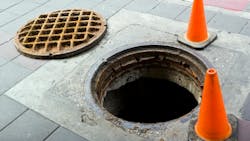
Utilities have made huge strides in network visibility over the last decade. Sensors are more accurate, connectivity is reliable, and data analytics have matured. Yet three issues still make monitoring harder and more expensive than it should be: installations that are slow and complex, systems that are costly to maintain, and platforms that can’t easily scale or adapt as networks grow.
For an industry that depends on fast, reliable data to prevent blockages, infiltration, and overflows, these challenges create unnecessary barriers. They slow down deployment, increase costs, and limit the number of sites that can be monitored.
The good news is that new technologies are addressing these long-standing problems. Improved connectivity, low-power designs, and modular hardware are making monitoring simpler to deploy, cheaper to maintain, and easier to grow. The result is a new wave of systems designed for field reality, not lab conditions.
Installations that take too long and cost too much
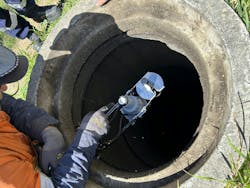
If it takes longer than 30 minutes to install a sewer level sensor, it costs too much.
Installing sewer monitoring systems has traditionally been harder and slower than it needs to be. In many cases, getting a single site online can take hours when factoring in mounting sensors in pits, routing cables, attaching antennas to lids, and waiting for stable connectivity. Each of these steps adds time, labour, and cost, especially when traffic control or specialist crews are involved.
Connectivity has been a big part of the problem. Satellite systems were once the go-to option, but they are expensive and often require a complex setup. Low-power cellular technologies such as NB-IoT and LTE-M (Cat-M1) provided by T-Mobile, Verizon and AT&T offer an alternative solution. They provide strong in-ground coverage at a lower cost, removing the need for external antennas or line-of-sight installation.
In fact these networks often have signal where standard mobile phones do not. Combined with dual-SIM capability, devices can automatically switch between carriers for uninterrupted data flow giving utilities reliable connectivity without the setup burden or ongoing cost of satellite.
Compounded communications friction can add up for wastewater systems
Even with better connectivity, the physical process still adds friction. Technicians must coordinate access, test signal strength, seal enclosures, and ensure the sensor and logger communicate reliably. For utilities managing large networks, small delays compound quickly, a 30-minute overrun per site becomes weeks of lost time across dozens of installs.
Every added step increases the cost per site and limits the total number of sensors that can be deployed within a budget year. This slows down the rollout of smart network initiatives and delays the insights needed to manage overflows and infiltration events more effectively.
Newer technologies have removed much of this friction. Integrated devices reduce the number of components that need to be mounted or wired. Improved connectivity modules mean there is no need for external antennas or lid modifications. Configuration can now be done via mobile apps or field tools, cutting install time from hours to minutes.
In real terms, this means the same team that once installed perhaps two units a day can now complete upward of 10 in the same timeframe. Quicker, simpler installations not only reduce costs, they also accelerate how quickly utilities gain actionable data from their systems.
Monitoring that costs too much to keep running
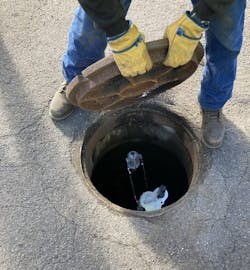
Sewer monitoring has traditionally carried a high total cost of ownership. The initial purchase price is only part of the story as ongoing maintenance, battery changes, calibration, and replacement parts often exceed the original investment within a few years.
The real challenge is longevity. Sewer environments are some of the harshest places for electronics. Constant humidity, corrosive gases such as hydrogen sulphide, fluctuating temperatures, and periods of submersion all take their toll. Even when systems were built with this in mind, over time housings degrade, seals weaken, and electronics corrode. Each failure means more callouts, more labour, and higher ongoing costs.
Modern designs are addressing this head-on. Newer enclosures are engineered specifically for sewer conditions, fully sealed, pressure-tested, and built from materials that resist chemical corrosion and moisture ingress. Connectors and fittings are designed to prevent wicking and electrolysis, while internal components are isolated to avoid condensation damage. These improvements extend the life of every device in the field.
Power systems are evolving too. Long-life, low-drain batteries now sustain operation for years, and field-swappable modules allow technicians to replace batteries in minutes without disturbing the rest of the installation. Instead of replacing an entire unit, utilities can refresh power on-site and keep devices operating well beyond their initial service cycle. Batteries can last up to 10 years, meaning the costly exercise of lifting the lid again is delayed as long as possible.
Utilities using newer technology report successful trial programs costing in the range of $10,000 for a number of installed sensors, achieving meaningful network coverage and performance insight at a relatively low price point. A successful trial of this scale allows utilities to prove the solution and build a strong business case for wider rollout, supported by clear data on cost savings and operational performance. When equipment lasts longer and can be serviced safely at the surface, technician time in the field drops significantly. The result is a lower total cost of ownership and the ability to direct budgets toward expanding coverage rather than maintaining it.
Inflexible water systems struggle to scale or adapt
The third battle is flexibility. Many traditional systems were built for a single purpose: monitoring level at a handful of critical sites. They perform well in isolation, but when utilities try to expand monitoring to include flow, rainfall, infiltration, or water quality, those systems struggle to keep up. Each new use case often requires new hardware, new integrations, and new licences driving up cost and complexity.
The result is fragmentation. Utilities end up managing several different platforms, each handling one small part of the network. Data sits in silos, making it harder to build a complete picture of how the system behaves during storm events or dry weather inflow.
Modern platforms are changing that. Today’s systems are designed to be open, flexible, and data-agnostic. A single device can support multiple applications from level and flow monitoring to tank, rainfall, or pressure measurement without changing hardware. This flexibility gives utilities the ability to grow organically as priorities evolve, without reinvesting in separate systems.
The benefits go beyond technical efficiency. A unified monitoring platform also simplifies workforce training, streamlines reporting, and improves collaboration between operations, planning, and environmental teams. Instead of managing multiple logins and dashboards, staff can view and act on consistent, real-time information across the entire network.
That adaptability changes the economics completely. Instead of buying separate systems for every challenge, utilities can build one network that scales as their needs grow. It is faster to expand, easier to manage, and far more cost-effective to operate over time.
Digital technologies will reshape the future wastewater
The technology to solve these challenges already exists and utilities around the world are starting to adopt it. The opportunity now lies in using these advances to reshape how monitoring programs are designed and delivered.
The focus should be on three core principles:
- Simplicity: Devices that are fast to deploy and easy to maintain.
- Durability: Hardware that withstands real-world conditions and delivers consistent data over years.
- Interoperability: Platforms that integrate seamlessly with existing SCADA and analytics tools.
When monitoring is easier to deploy, cheaper to maintain, and smarter to manage, utilities can shift from reactive maintenance to proactive management. That means fewer overflows, faster insights, and more time to act before problems become public headlines. Utilities across the U.S. and abroad are proving that these challenges can be overcome by leveraging the latest technologies for improved performance and efficiencies.
About the Author
Gerhard Loots
Gerhard Loots is the Chief Executive Officer of Kallipr, an industrial IoT company specialising in remote monitoring solutions for water and wastewater networks. He has more than 20 years of experience leading technology and innovation programs across the utilities and telecommunications sectors and is passionate about helping organisations use data to improve environmental outcomes.