Wastewater Digest announces 2026 Top Projects Winners
Key Highlights
- Henderson’s Kurt R. Segler WRF expansion added 12 MGD while maintaining plant operations through construction.
- Sherman’s $289 million membrane bioreactor project was delivered on a compressed schedule to serve major industrial growth.
- The Southern Sarpy Wastewater System built regional infrastructure to support development across a fast-growing Nebraska county.
- Brunswick County’s Southport Mulberry Branch Road facility helped address wastewater capacity constraints in Shallotte, North Carolina.
- Galveston’s Pirates Beach replacement plant was designed for coastal conditions and future community growth with mindfulness of its surrounding community.
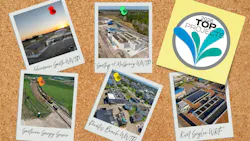
Wastewater Digest annually seeks nominations for wastewater projects in the United States to feature in its Top Projects program. This year, 13 projects were nominated for the wastewater category, of which the editorial team selecte five to be awarded the distinct honor of being a Wastewater Digest 2026 Top Project.
Projects are evaluated on innovation in design and construction techniques, complexity of work, collaboration with stakeholders, challenges and problem solving, size and scale, and of course, value and impact to their community. This year's winners exemplify those criteria, which you can learn about in the blurbs below.
Think your project is worthy and notable? Submit your nomination using the button below today. The nomination is open all year, meaning nominations submitted today will be in the running for the 2027 Top Projects nomination and evaulation period.
- Location: Henderson, Nevada
- Cost: $98.2 million
- Owner: City of Henderson
- Partners: McCarthy Building Companies, Bombard Electric, SW Specialty Coatings, CMC Rebar, Jacobs
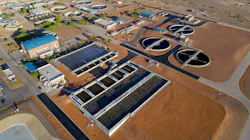
Kurt R. Segler WRF Phase 4
The first construction manager at risk (CMAR) project for Henderson, Nevada increased capacity from 32 million gallons per day to 44 in response to commercial, industrial and residential growth. This facilitated while returning reclaimed water to Las Vegas Wash and ultimately Lake Mead.
The city and the designers looked at this expansion with a long-term vision that kept more than the community in mind. By designing constructing and expanding the plant on the east side of the property, they facilitated taking older sections of the west side offline for maintenance and future upgrades of its own. The 12 MGD expansion included a new biological nutrient removal system with a 125-foot secondary clarifier, among several upgrades to blowers, pumps, chemical feed systems and more in the existing facility.
While market volatility created challenges in guaranteeing prices, McCarthy was ultimately able to make enough gurantees to save the project $1.5 million in total costs by the end. A greater challenge was maintaining the plant operations during construction as there were 95 MOPOs to navigate. Deliberate and thorough coordination with city and operations teams, Jacobs and McCarthy allowed for 15-minute interval shutdowns to complete critical work without negatively disrupting the plant during construction.
Two final successful components of the project included safety and advanced technology utilization. First, there were no recordables or lost time accidents across more than 300,000 labor hours. Second, through the use of drones, 3D laser scanning, field verification and other tools, the project team was able to accurately map underground utilities to minimize and eliminate disruptions during construction.
- Location: Sherman, Texas
- Cost: $289 million
- Owner: City of Sherman, Texas
- Partners: Plummer, Kiewitt, Pape-Dawson, Carollo, Plus Six, Paradyne Consulting Works
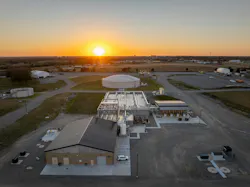
Sherman South WWTP MBR
To meet the needs of a $30 billion semiconductor fabrication investment in Sherman, Texas, utility leaders recognized that its conventional activated sludge treatment plant would not meet treatment needs. Increases in ammonia concentration, biochemical oxygen demand and biological inhibitory compounds drove leaders to a greenfield membrane bioreactor facility with 4 million gallons per day of capacity that could be expanded to 16 MGD. And they needed to complete it in 24 months with only 30% of the design completed by the time the project began.
Working with the Texas Commission on Environmental Quality, Sherman kept its activated sludge plant running and routed the effluent intended for the MBR facility to it while the plant could be built. Thanks to the Consturction Manager At Risk project delivery method, Sherman coordinated with Kiewitt, Pape-Dawson, Plummer, and Plus Six on a guaranteed maximum price strategy with discipline task force meetings and executive coordination sessions.
These meetings and sessions were crucial to navigating market variability, scope growth and the compressed schedule, which amounted to $17 million in accepted value engineering, $17 million in total budget savings and saved 45 critical path schedule days through improved sequencing and optimization.
One example of this optimization in action came about with the electrical work that was falling behind with a subcontractor. Rather than rescope the work or find a new sub-contractor, Kiewitt offered some of its resources to help the subcontractor. With some resequencing and additional crews, the project avoided delays and maintained its startup and commissioning milestones.
- Location: Sarpy County, Nebraska
- Cost: $130 million
- Owner: Sarpy County and Cities Wastewater Authority
- Partners: HDR, Hawkins Construction
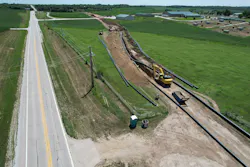
Southern Sarpy Wastewater System
Sarpy County is the fastest growing county in the state of Nebraska, but that growth is hindered by a natural ridgeline separating the northern and southern halves of the county. To the north, development has been strong due to centralized water and wastewater services courtesy of connections to facilities in Omaha. South of the ridgeline, however, sanitary sewer infrastructure has not existed, which has slowed growth for that area of the country.
To facilitate the continued population and economic boom, stakeholders from several cities in the county developed a regional wastewater authority, Sarpy County and Cities Wastewater Authority following a 2015 study. The $130 million Phase 1 constructed 19 miles of sewer and three lift stations that pull flow from north to south using gravity, and also built 17 miles of dual force mains to convey waastewater to the Papillion Water Resource Recovery Facility.
The project also facilitated industrial growth of data centers by conveying cooling water from those centers to equalizations lagoon as well as a controlled discharge cooling water equalization lagoon.
Most importantly, the citizens of Sarpy county and the cities that make up the wastewater authority to capitalize on the tax revenues of the future growth while allowing the blossoming Southern Sarpy County to bloom.
- Location: Shallotte, North Carolina
- Cost: $47.4 million
- Owner: Brunswick County Public Utilities
- Partners: Brunswick County Public Utilities, W.K. Dickson & Co., Inc., Harper General Contractors, Wooten’s Electric, Wayne’s Backhoe Service, R.H. Moore Co., N3 Construction, Berkel, Carmichael Construction Company, Inc. Southern Painting, Concrete Forming Associates, Cape Fear Asphalt, Truus Link, Thermal Tran, Spann Roofing, Citidel Masonry LLC, Smith-Midland, Lyle Contracting, E.L. Jones Development, Carolina Awning, Greenrise Technology, Crawford Doors, A3 Communications, AC Schultes, R.L. Haire Electric & Controls LLC, Gurkin Construction Company
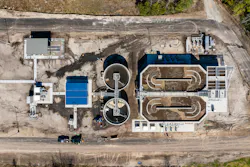
Southport Mulberry Branch Road WWTP
In order to terminate a moratorium on building construction due to insufficient wastewater treatment capacity in Brunswick County, North Carolina, officials initiated the construction of a water reclamation facility.
Two standout features of this plant are the 11 acre spray fields the 25 acres used for irrigation. Through this process, wastewater flows through an irrigation system to 11 acres where it is sprayed onto the sandy soil. From there, the water percolates through the soil providing additional treatment using infiltration basins.
To ensure no issues were created with other underground utilities across this acreage as well as the facility site, the construction team used 3D modeling to identify conflicts before dirt was turned and the project was underway. Similarly, drones helped to measure engineered fill installation, track the earthwork quantities and verify both the surcharge placement and removal.
Connecting the new treatment plant to the existing wastewater system for the entire town of Shallotte was a moment of truth and a critical milestone for the project’s success. This was done during low-flow overnight conditions under careful and deliberate coordination with the utility and project stakeholders to ensure continued compliance.
- Location: Galveston, Texas
- Cost: $22.8 million
- Owner: City of Galveston
- Partners: Lockwood, Andrews and Newnam; Indutrial TX Corp.;
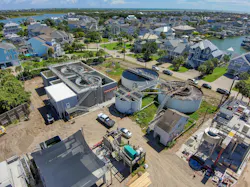
Pirates Beach WWTP Replacement
Constructing a new plant with more than three times the rated compacity of the old one in a limited footprint next to a luxury residential community filled with million-dollar homes is a challenge in itself. Doing so while operating a former plant that had grown frail due to consistent exposure to the harsh Gulf Coast environment added further complexity for the Pirates Beach WWTP Replacement.
Given the proximity to the luxury community, maintaining good standing with the neighbors was a priority, so light shields were used during construction and blowers were housed inside to dampen noise.
Care and consideration were also placed on the materials used for construction of the plant so that long-term vulnerabilities to the coastal environment were minimized. Reinforced concrete replaced painted steel tanks. Electrical infrastructure rose 18 inches above flood elevation. And scour protection measures were incorporated to make the new plant more resilient to hurricane season storms and erosion from flooding.
In addition to constructing the new 0.5 million gallon per day plant on a quarter-acre site, the plans also included improvements to the upstream infrastructure. One of the three lift stations was replaced, force mains were rerouted and pumps were upsized to handle the increase in flow. All told, the new plant stages the community for further growth in flow capacity while weathering the storms of the Gulf Coast.
About the Author
 Bob Crossen
Bob Crossen is the vice president of content strategy for the Water and Energy Groups of Endeavor Business Media, a division of EndeavorB2B. EB2B publishes WaterWorld, Wastewater Digest and Stormwater Solutions in its water portfolio and publishes Oil & Gas Journal, Offshore Magazine, T&D World, EnergyTech and Microgrid Knowledge in its energy portfolio. Crossen graduated from Illinois State University in Dec. 2011 with a Bachelor of Arts in German and a Bachelor of Arts in Journalism. He worked for Campbell Publications, a weekly newspaper company in rural Illinois outside St. Louis for four years as a reporter and regional editor. Crossen can be reached at [email protected].