Q&A: Madison launches sewer study to plan for future growth
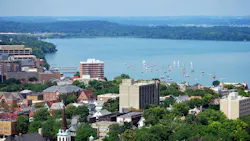
The City of Madison, Wisconsin, has launched a sanitary sewer study aimed at evaluating wastewater collection system capacity and identifying infrastructure improvements needed to support future growth and redevelopment.
Carollo Engineers will lead the Campus, Downtown, and East Washington Avenue Sanitary Sewer Study, which will use hydraulic modeling to assess existing system performance, analyze the impacts of planned development and create a framework for future sewer planning across the city.
The project comes as Madison experiences continued population growth and redevelopment, particularly along major transit corridors, increasing demand on the sanitary sewer system.

Wastewater Digest editors submitted a list of questions via email to the City of Madison's Department of Public Works Engineering Division. Mark Moder, PE, sewer utility principal engineer, and Ryan Stenjem, PE, project manager, answered questions about the sewer study below.
What prompted the City of Madison to launch the Campus, Downtown and East Washington Avenue Sanitary Sewer Study, and why was this corridor selected first?
The study area was selected to capture several of the most population dense parts of the city, as well as areas of recent redevelopment, or expected near future redevelopment. These parts of the city have been rapidly growing in population and construction of new multi-family residential buildings. It is expected that this growth will continue in these areas, putting a strain on some of the oldest parts of the sanitary sewer system. Many of the redevelopment projects in the downtown area (Campus & E. Washington Ave. area) have already resulted in needing sewer upgrades due to insufficient capacity to handle the proposed wastewater flow from the apartment developments.
What are the primary goals of the study, and what key questions are you hoping it will answer about the city's wastewater collection system?
The primary objective is to develop the tools to have comprehensive sanitary sewer models that allow us to determine the impacts from new developments coming into the City and see where the system needs improvements. An additional benefit is through the study we will be able to do long-term planning for infrastructure improvements where we find the sanitary system is nearing capacity.
Can you explain how the sanitary sewer model will be developed and calibrated, and why that process is important for accurate planning?
Carollo Engineers will be constructing the model largely from our existing GIS records, reviewing as built plans, and supplementing with field survey as needed. Their team and subconsultant RJN have started a multi-month monitoring program to measure wastewater levels and flows at key points they identified throughout the system. They will use the monitored volume data, alongside water use data provided by the City’s Water Utility to adjust the estimated wastewater generation in the model. Comparing the monitoring data to the modeled data will also allow them to identify areas where the model may not be accurately representing the system hydraulics. The model calibration will allow us to have much greater confidence in model results and predictions.
How will the study help Madison manage future population growth and redevelopment while maintaining reliable wastewater service?
The models produced from this study will allow us to better understand the limitations of our sanitary sewer system and work with developers to modify projects or improve the system as needed.
The project will also examine wet-weather impacts. How could the study help identify inflow and infiltration issues or reduce the risk of sanitary sewer overflows?
At this point in time, the study is not expected to simulate wet-weather conditions. However, the monitoring period was recently expanded to attempt to capture a wider range of weather conditions and potentially allow for future wet-weather calibration. The hope is that this monitoring data combined with pumping SCADA data might point to I&I hot spots and may facilitate future more detailed study.
How will the results of the study influence future capital improvement planning and infrastructure investment decisions?
The study will allow us to be more proactive in planning for capital projects by having a complete picture of our systemwide performance and needs.
The project includes creating standardized modeling guidance for future studies. Why is that an important component of the program?
The City anticipates completing additional studies to eventually develop models of the entire City sanitary system. Because these studies will take place over multiple years and may be completed by different engineering consultants. We want to ensure consistency in the process to help make sure City staff are able to quickly move between models in the future with a clear understanding of the assumptions that went into building them.
Do you envision this becoming a citywide program, and how could the model evolve as Madison continues to grow?
Yes the intention is to complete multiple studies and eventually develop models of the whole City system.
What lessons from this project could benefit other communities that are facing rapid growth or aging wastewater infrastructure?
Hopefully at the end of the study we’ll be more able to share some more of the lessons learned. Overall though the Madison Sewer Utility feels that the time and investment in developing these models will save us time and effort down the road. We will more quickly be able to respond and assess system needs as new developments come into the City, and we’ll be able to better proactively plan for infrastructure improvements, rather than reacting as problems are identified.
Looking ahead, how do you see advances in hydraulic modeling, GIS and digital technologies changing the way utilities plan and manage wastewater collection systems?
Technology is always improving. Accurate, easy to use and view records and digital models are critical for understanding and communicating our system performance. Hopefully this will allow us to make better and quicker decisions serving the needs of our community.
About the Author
 Alex Cossin
Alex Cossin
Associate Editor
Alex Cossin is lead reporter, staff writer and content strategist for Waterworld Magazine, Wastewater Digest, Stormwater Solutions and Water Technology. Cossin graduated from Kent State University in 2018 with a Bachelor of Science in Journalism. Cossin can be reached at [email protected].