Why decentralized wastewater systems meet today's advanced treatment challenges
Key Highlights
- Decentralized systems can produce effluent quality comparable to traditional centralized treatment, often at a lower cost.
- They inherently prevent combined sewer overflows by managing wastewater at or near its source, reducing environmental and public health risks.
- Liquid-only sewers (LOS) and packaged treatment plants are effective solutions for challenging terrains, high groundwater, and environmentally sensitive areas.
- Case studies from Gloucester, Massachusetts, and a Texas campground demonstrate the long-term reliability and operational success of decentralized systems.
- Advances in treatment technology and EPA support are making decentralized systems increasingly viable and attractive for diverse communities.
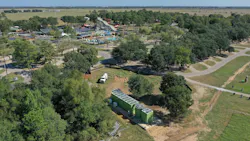
Many locations in the U.S. and Canada are passing regulations requiring higher levels of treatment for environmentally sensitive areas. Decentralized system design and technologies have met the challenge to provide advanced treatment for a range of system facility types, wastewater strength and flows.
For most communities, centralized sewers are financially out of reach, at capacity, and underinvested. The evolution of decentralized systems is enabling communities or businesses to meet more stringent rules in a way the community and residents can afford. This article covers the wastewater challenges and regulations impacting system selection and design today, the decentralized advances that are addressing those challenges, and specific examples of successfully operating systems.
Centralized sewer costs are rising
The costs of centralized sewering continue to rise. Two beach communities in Old Lyme, Connecticut, for example, had proposed construction projects in February 2026 that have resulted in $65k to $75k per home, including the private lateral connection.
Out on Cape Cod, the town of Falmouth, Massachusetts had proposed Great Pond Phase 1 (2025 project bid) with a total project cost of roughly $60 million for a service area of approximately 820 equivalent dwelling units. This put the full capital cost at $70k to $75k per home, not including the private lateral connection.
The costs of sewering can vary dramatically. For example, one project may only include sanitary sewer extensions, while another project could include upgrades in capacity to the treatment plant or an entirely new treatment plant. Each project should be viewed objectively and include a decentralized option which is evaluated by a firm with experience in that area.
U.S. EPA fact sheets back up decentralized treatment successes
The U.S. EPA has issued a series of fact sheets supporting decentralized systems. One titled "Decentralized Wastewater Treatment Systems Can Protect the Environment, Public Health, and Water Quality," includes the following statement:
Decentralized treatment can produce effluent quality that is equal to or higher than other wastewater disposal options. These decentralized systems use the same advanced treatment technologies as discharging systems. Since they use the treatment capacity of the soil, they achieve high quality treatment at a lower cost than other options.
The same wastewater treatment technologies that were once only available for large scale treatment plants are now available for small flow systems. This evolution means that decentralized systems can now provide the same level of treatment offered by larger systems often at a lower cost to communities and homeowners. Not only do they provide the same level of treatment offered by discharging systems, but they also offer environmental benefits such as recharging aquifers and local groundwater supply keeping water local to its source.
Reduce combined sewer overflows and protect the environment
Decentralized wastewater systems inherently eliminate the risk of combined sewer overflows (CSOs) because they do not have inflow and infiltration (I&I) issues or convey stormwater and sanitary sewage through a single, centralized collection network. In conventional combined systems, large precipitation events can exceed the hydraulic capacity of pipes and treatment plants, resulting in untreated sewage being discharged directly into surface waters, an event linked to elevated pathogen levels and documented public health risks.
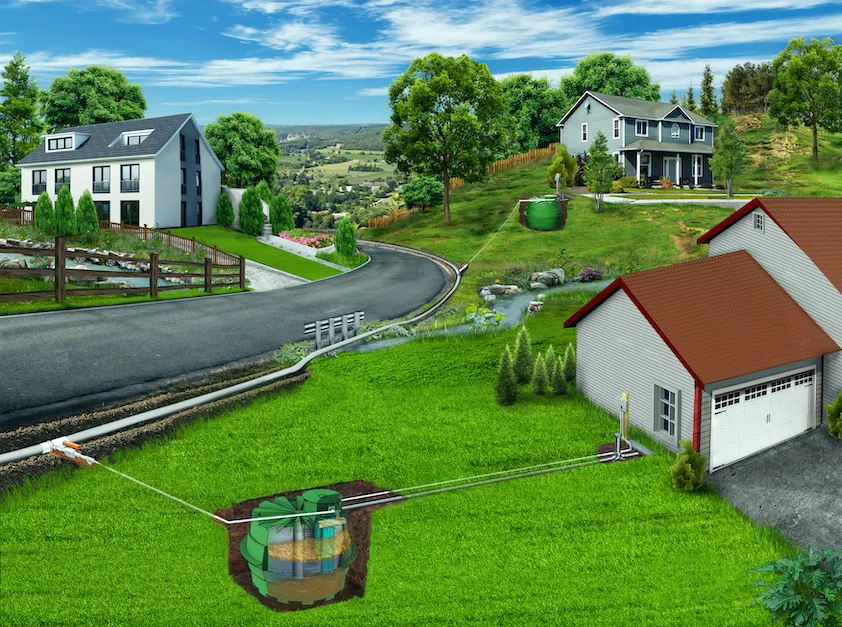
In contrast, decentralized systems such as liquid only sewers (LOS) — also referred to as septic tank effluent pumping (STEP) systems — and clustered treatment units, manage wastewater at or near its source, typically infiltrating or dispersing effluent into the subsurface where natural soil treatment processes provide attenuation of pathogens and nutrients. Because these systems operate independently of stormwater flows and do not rely on large interceptor sewers, they are not subject to the hydraulic surcharging that causes CSOs. As a result, properly designed, sited, and maintained decentralized systems offer a resilient and protective approach to wastewater management, particularly in coastal or environmentally sensitive areas, by preventing episodic releases of untreated sewage and reducing the likelihood of widespread contamination of receiving waters.
What are liquid only sewers?
Liquid only sewers (LOS) offer several significant advantages by separating solids at the source and conveying only settled effluent through the collection network. Because solids remain in individual septic tanks, downstream piping can be smaller in diameter, shallowly installed, and laid to follow natural topography. This reduces excavation, material, and construction costs compared to conventional gravity sewers.
The removal of solids also minimizes the risk of blockages and reduces hydraulic variability, allowing for more consistent and efficient conveyance to centralized or clustered treatment facilities. STEP systems are well suited for areas with challenging terrain, high groundwater, or low-density development, where traditional sewers are cost-prohibitive. Additionally, they provide operational resilience through distributed pretreatment, reduce infiltration and inflow, and can offer lower lifecycle costs while maintaining effective environmental protection when properly managed.
Massachusetts LOS system reduces solids in sewer mains
The city of Gloucester, Massachusetts implemented a LOS system in the mid‑1990s, primarily as part of efforts to extend sewer service to coastal neighborhoods where conventional gravity sewers were impractical due to shallow bedrock, variable topography, and high groundwater. Orenco Systems provided equipment such as pumps, vaults, and controls, but more importantly guidance during the design and bidding process, then support to contractors and municipal staff during installation and operations and maintenance.
Gloucester’s LOS systems function as low-pressure sewer networks, where individual septic tanks retain solids, and where pumps convey clarified effluent to the municipal collection system and ultimately the city’s water pollution control facility (WPCF). The city continues to use these systems in multiple service areas, and in many cases, it owns and maintains the tanks and pumps, ensuring consistent operation and long-term reliability.
From a performance standpoint, the LOS/STEP approach in Gloucester has been operationally successful for collection and conveyance, particularly in a difficult coastal area. Key observed benefits include:
- Reliable conveyance under variable terrain conditions, avoiding the need for deep excavation or extensive lift stations
- Reduced solids loading in sewer mains, minimizing blockages and maintenance issues
- Distributed pretreatment at each property, which stabilizes flows and reduces peak loading to the downstream system
Gloucester demonstrates that LOS systems can be a highly effective and durable solution for decentralized or semi-centralized collection, especially in coastal New England communities with significant site constraints. The system has been in service for nearly 30 years and remains an integral part of the city’s wastewater infrastructure. The performance supports the broader conclusion that LOS systems provide long term, cost-effective, resilient collection with manageable maintenance requirements.
Texas campground treats high strength waste with packaged treatment plant
A popular full-service campground and recreation center in Texas has cabins, tent sites, RV sites, swimming pools and a lazy river, and two food service venues.
The park’s existing sewage treatment system was at capacity, restricting park service expansion and requiring costly and time consuming maintenance. A new system was proposed for a design flow of 30,000 gallons per day at a waste strength of 800 mg/L of biological oxygen demand.
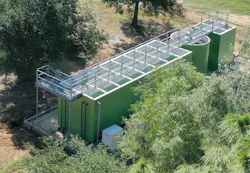
The engineer specified an Enviro-Aire package treatment plant, which included steel tanks coated with epoxy over A36 steel for extended lifespan. The tanks were prepared using steel chard/grit to a near white metal condition. This coating system provides optimum service life due to the adhesion of the epoxy coating to the base metal. The package plant sits on an engineered, reinforced concrete structural slab. The duplicative plant features dual aeration basins, sludge holding tanks, blowers and pumps, and a mechanical clarifier. The custom-designed package treatment plant was built at the factory and shipped to the project site as a self-contained unit and required minimal assembly once on site.
The package treatment plant processes wastewater via an extended aeration and oxidation process that purifies the sewage using naturally-occurring bacteria to reduce the organic compounds. Continued mixing with air feeds the biological organisms, which consume volatile materials and convert them into water, carbon dioxide, and ash. The result is a clear and odor-free effluent.
Conclusion
As wastewater treatment and discharge regulations across the U.S. become more stringent and costs continue to rise, new approaches and technology need to be explored to provide the desired treatment and protect public health. These must be cost effective enough for communities and homeowners to install and operate. Advanced decentralized treatment designs and strategies are stepping up to extend the capacity and treatment capabilities of existing centralized sewage treatment facilities or as an alternative to sewering. Design experts and manufacturers are responding with more advanced treatment options that are proving to be extremely effective and system designs that continue to evolve.
About the Author
Ashley Donnelly
Infiltrator Water Technologies
Ashley Donnelly is a technical training and sales development manager for Infiltrator Water Technologies.
Dennis Hallahan
Dennis F. Hallahan, P.E., is the Technical Director of Infiltrator Water Technologies. Dennis has over 30 years of experience with the design, construction of decentralized wastewater treatment systems. He has authored numerous articles for on-site industry magazines and regularly gives presentations nationally on the science and fundamentals of on-site wastewater treatment systems. Dennis also serves on various national industry association wastewater committees.