Operators are building trust in machine learning recommendations at wastewater plants
Key Highlights
- Predictive analytics connect existing plant data sources to generate real-time recommendations for chemical dosing and aeration, improving efficiency without requiring new instrumentation.
- Successful implementations depend on transparent, traceable recommendations that operators can accept or decline, fostering trust and confidence in the system.
- Operator involvement and collaboration are crucial; models are trained on historical data and designed to support, not replace, human decision-making.
- Chemical savings, energy reductions, and cost efficiencies have been achieved across multiple facilities, demonstrating the tangible benefits of predictive tools.
- Long-term success relies on maintaining data quality, fostering operator trust, and embedding institutional knowledge within predictive models to support staff, especially new hires.
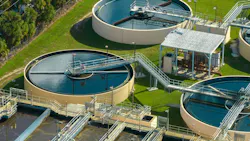
Wastewater treatment plant operators are required to carefully navigate the balance between meeting effluent permit limits and optimizing chemical and energy usage. This, in combination with experienced staff retiring faster than new hires can absorb decades of institutional knowledge results in a persistent tension between caution and cost: To err on the side of caution, operators often conservatively dose disinfectant chemicals to avoid permit exceedances and run aeration blowers at conservative setpoints. The increased cost of chemical and energy has led to pressure from utilities to optimize the system.
These pressures are not new. What has changed, however, is the availability of tools that can help operators make more precise, data-informed decisions in real time. Machine learning and predictive analytics algorithms are now being deployed at water and wastewater facilities across the United States — not to automate operations, but to enhance situational awareness for operators, enabling them to make more confident decisions. Implementation experience across multiple plants offers a utility practical lessons about what these tools actually deliver and best practices for earning operator trust.
The meaning of predictive in a treatment plant environment
At their core, these tools unlock value from data that already exists within the plant, but is often siloed across multiple systems. Years of SCADA historian records, Hach WIMS laboratory data, influent monitoring, weather station feeds, and CMMS work order histories are ingested into an uniformed data science platform, allowing these previously disparate data sources to be analyzed in context with one another. By connecting these data streams, models identify correlations between operating conditions and outcomes. The result is the ability to generate recommended setpoints-chemical doses, blower speeds, maintenance priorities for current operations based on what has historically worked under similar conditions.
What these models do not do is equally important. They do not run the plant autonomously, override operator judgment, or make decisions on their own. Recommendations can be delivered as push notifications to operators' smartphones or tablets, timed to coincide with shift changes. The operator reviews the recommendation, accepts or declines it, and the system tracks adoption rates and outcomes over time. In most deployments, no new instrumentation is required because the data already captured in existing plant systems provides sufficient signal for meaningful predictions.
Chemical dosing optimization
Chemical dosing offers some of the clearest results because the savings are immediate and measurable. At a 25 million gallon per day (MGD) advanced treatment facility in Pima County, Arizona, operators achieved a 49% reduction in disinfection chemical feed rates after deploying a predictive model trained on historical operating data and real-time process conditions. The model correlates current influent characteristics, treatment performance, and seasonal patterns to recommend chlorine doses that achieve bacteria inactivation without costly conservative dosing that had been standard practice. Operators follow these recommendations nearly 100% of the time because the guidance is grounded in their own facility's historical performance, not a generic algorithm. Permit compliance has been perfect throughout the deployment, and the savings are ongoing.
A similar approach at a plant in Wilmington, Delaware, targeted sodium hypochlorite dosing for disinfection. Because laboratory results for bacteria levels take one to three days, operators had long defaulted to high dosage rates as an insurance policy. A predictive model incorporating weather station data and historical dosing effectiveness now delivers eight daily push notifications aligned with operator rounds. The facility is on track to save approximately $250,000 per year in chemical costs, a 20% improvement, while maintaining full regulatory compliance.
The pattern repeats across different chemicals and permit parameters. At a facility in Woonsocket, Rhode Island, ferric chloride dosage for phosphorus removal was reduced by 15% simply by mining the historical relationship between influent conditions and effective dosing, even with operators initially following recommendations only about 40% of the time. At a 28 MGD plant in Vancouver, Washington, polymer dosage for solids dewatering dropped by 10% against a baseline of over $600,000 in annual polymer spending, with adoption rates climbing above 70% as staff gained confidence in the model's recommendations.
Energy Savings
Aeration blowers are typically the single largest energy consumer at a wastewater treatment plant, making them an obvious target for optimization. At Pima County’s 25 MGD nutrient removal plant, predictive blower setpoint recommendations pushed to operators' mobile devices produced a 10 to 20% reduction in blower power usage within the first month of deployment. Staff accepted recommendations at a 90% rate. In addition to monetary savings, for every megawatt-hour of electricity saved, the facility avoids over 1,000 pounds of CO₂ emissions, a meaningful contribution to the county's greenhouse gas reduction goals.
The approach also proved effective at much smaller facilities. A 2.8 MGD water reuse facility in Clovis, California-already well-optimized with advanced SCADA controls achieved a 15 to 25% reduction in unit aeration power after the data science team collected WIMS and SCADA data and modeled actual aeration needs. Notably, the only additional instrument installed across all deployments was a single ammonia probe at the Clovis site to provide a better leading indicator of aeration demand. For most applications existing plant instrumentation suffices.
Earning Operator Trust
White the technical infrastructure for these tools is relatively straightforward, the more important work is building trust. Wastewater operators manage highly complex biological processes every day, often under changing conditions and their experience is critical to successful plant performance. It is natural to approach new software with skepticism when it is information operational decisions. Successful implementations share several characteristics: recommendations are transparent and traceable to historical performance data the operators recognize, the operator always retains the authority to accept or decline, and the implementation team maintains regular collaboration with plant staff-typically through periodic calls and model updates.
Adoption rates tell the story of trust built over time. Early deployments may see partial use, but as operators validate recommendations against their own experience and see compliance maintained, adoption percentage can climb to 75%, 85%, and even higher at mature sites. At the Woodland Davis Clean Water Agency in California, operators requested and were given the ability to choose between two optimization approaches: one based on target turbidity, another on unit filter run volume, which helped reinforce their expertise rather than sidelining it. This partnership approach has led to that facility routinely achieving 10 to 15% chemical savings with enthusiastic staff participation.
An additional long-term benefit is that the models are trained on a facility's own historical performance, capturing patterns shaped by years of operator experience. This allows that knowledge to remain accessible over time ensuring that when a veteran operator retires, the institutional knowledge embedded in decades of SCADA data and dosing decisions does not leave with them. Newer staff receive recommendations grounded in that accumulated expertise from their first day on the job, shortening the learning curve during a period when the industry can least afford extended ramp-up times for new hires.
Practical Lessons for the Industry
Facilities that have realized measurable gains from predictive analytics share a common thread: they approached the technology as a tool to support their operators, not replace them. The data driving these insights already existed in their SCADA historians and CMMS databases. What makes these models work effectively is that they are built on each facility's own operating history, not on generic industry benchmarks. The savings gained whether 49% reductions in disinfection chemicals, 25% cuts in aeration energy, or $250,000 in annual chemical cost avoidance were sustained because operators owned the decision loop from the beginning. Their expertise guides how recommendations were interpreted and applied in practice.
For utilities evaluating these tools, the lesson is clear: the technology is mature, but success depends on data quality, operator engagement, and keeping humans firmly in control of the process.
About the Author
Souradip Datta
Souradip Datta, PE, PMP is a licensed professional engineer and project manager at Jacobs with experience spanning water and wastewater infrastructure, digital solutions, and resilience. He can be reached at [email protected].
Teresa Crisp
Teresa Crisp, PE, is a professional engineer at Jacobs with over two decades of experience in water and wastewater . She currently serves as the Regional Digital Market Solutions lead. She can be reached at [email protected]